Selenge (Baruunbüren sum)· Амарбаясгалант хийд
Amarbayasgalant Monastery
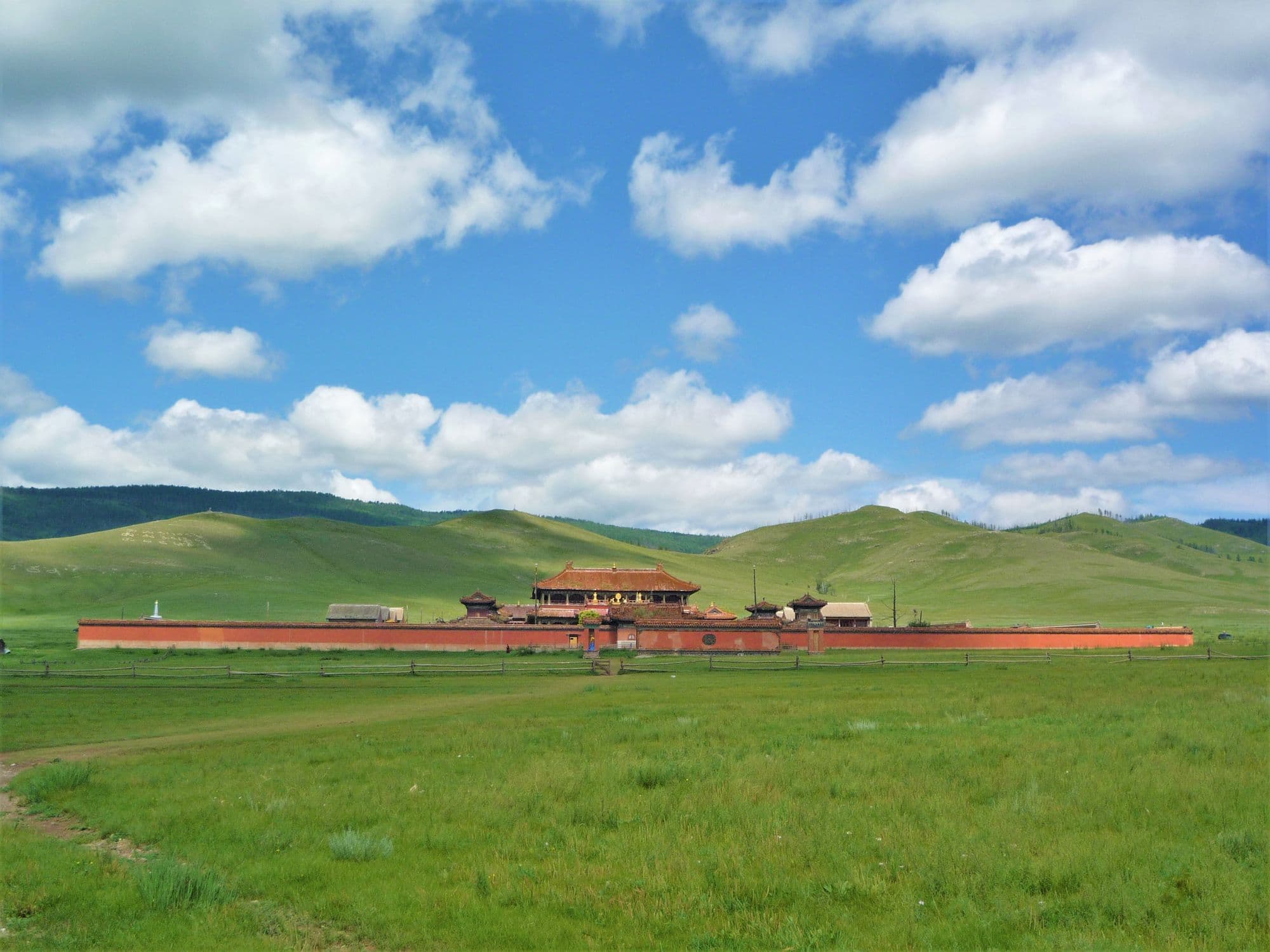
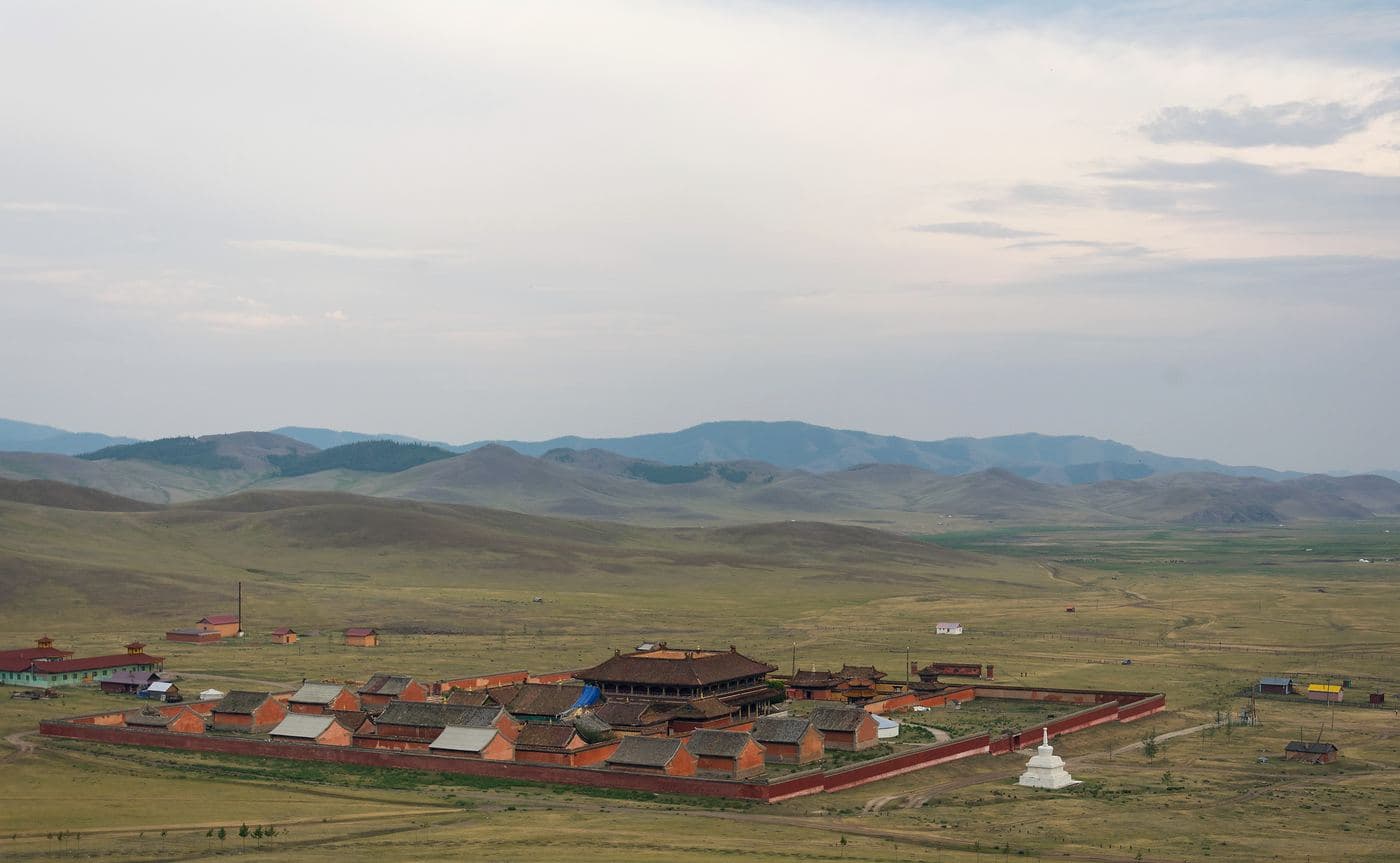
One of the three great Buddhist monastic centres of Mongolia, Amarbayasgalant stands alone in the Iven river valley at the foot of Bürenkhaan mountain in northern Selenge. It was built between 1727 and 1736 on the order of the Yongzheng Emperor and finished under Qianlong, as a resting place for Zanabazar, the first Jebtsundamba Khutuktu and spiritual teacher to the Qing imperial family; his remains were moved here in 1779. Unlike almost every other Mongolian monastery it kept much of its fabric through the 1930s purges, and the strict symmetrical Chinese plan - courtyard behind courtyard on a single axis - survives intact. At its height it held around six thousand monks.
- From Ulaanbaatar
- 330 km
- Drive time
- 5-7 depending on route
- Altitude
- 1,041 m
- Typical stay
- 1
- Best months
- Jun–Sep
- Jan: not a best month
- Feb: not a best month
- Mar: not a best month
- Apr: not a best month
- May: not a best month
- Jun: a best month
- Jul: a best month
- Aug: a best month
- Sep: a best month
- Oct: not a best month
- Nov: not a best month
- Dec: not a best month
Highlights
- The symmetrical walled complex laid out on a single Chinese axial plan, unusual in Mongolia
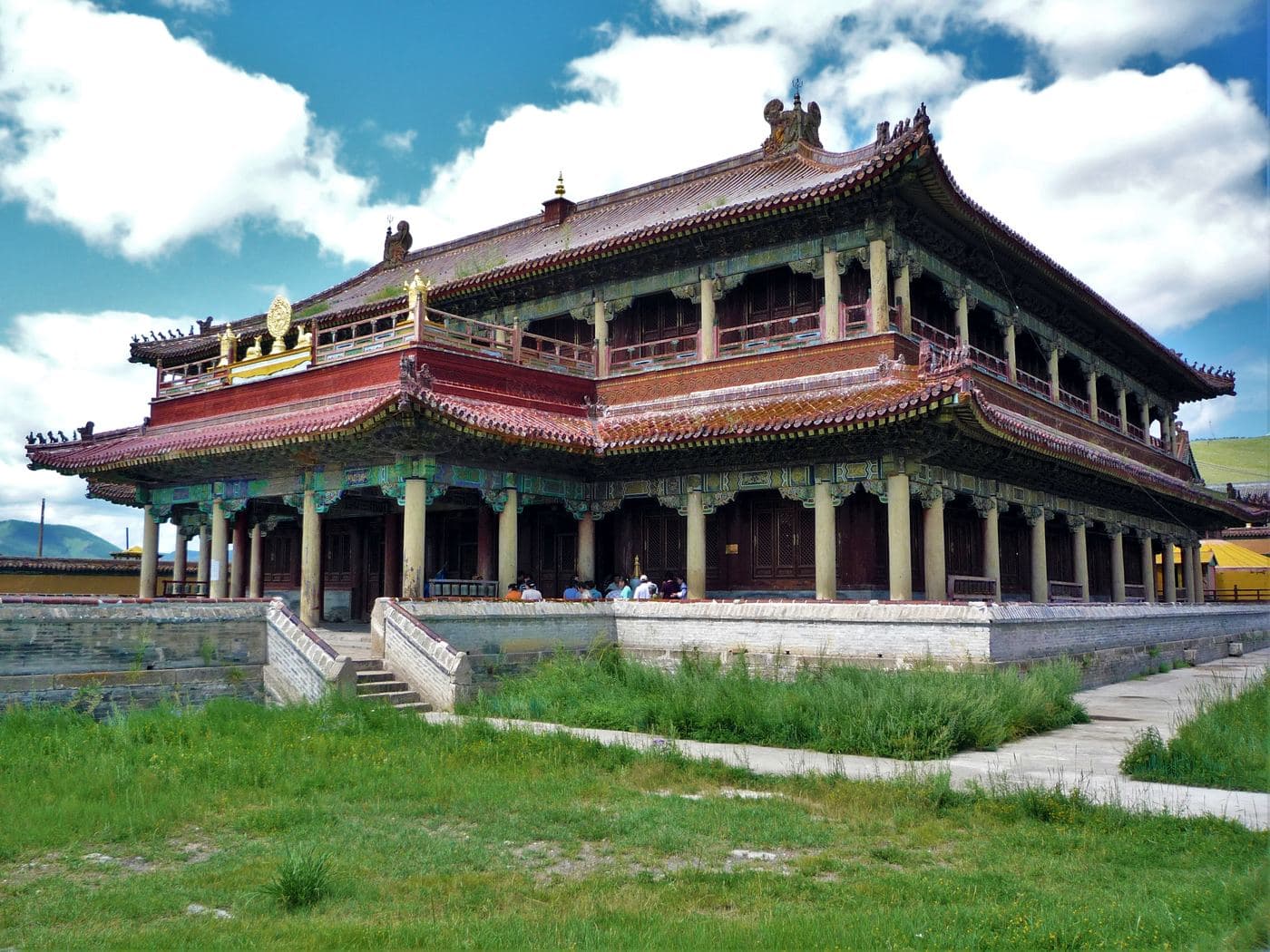
- The main Tsogchin assembly temple at the heart of the compound
- The reliquary of Zanabazar, whose remains were transferred here in 1779
- The hillside stupa and large Buddha figure on the slope above the monastery, with the whole valley below
- Morning chanting with the resident monks, if you stay the night nearby
- The Maitreya (Maidar) procession, held on the 15th day of the sixth lunar month
- The tsam masked dance on the 27th day of the sixth lunar month
- The Iven valley setting under Bürenkhaan, with no town in sight
Season notes
Open year-round, but the two big ceremonies follow the lunar calendar and usually fall in July or August - worth checking the date if you want to see the tsam. The final dirt road is poor after rain and slow in spring melt. At 1,040 m this is the lowest and mildest of the central destinations, and long northern summer evenings make it good for photography.
From Ulaanbaatar
Paved north on the Darkhan road, then west on the Erdenet road, then a final stretch of dirt road into the Iven valley. Routing varies: some drivers cut north-west earlier on rougher roads for a shorter distance, others stay on tarmac via Darkhan for a longer but faster run.
By air
None. Erdenet and Darkhan are reached by the Trans-Mongolian railway rather than by air.
Where to stay
- A small ger camp operates beside the monastery, and herder families in the Iven valley take guests; no 2026 rate verified from a primary source (unverified)
- Erdenet and Darkhan have conventional hotels if you would rather not overnight in the valley
Be aware
Sources (4)
- Amarbayasgalant Monastery - Wikipedia — one of the three largest monastic centres, Iven valley and Bürenkhaan setting, Baruunbüren sum in Selenge, Erdenet 120 km away, construction 1727-1736 under Yongzheng and Qianlong, Zanabazar's remains moved 1779, dedication to Maitreya
- Амарбаясгалант хийд - Монгол Википедиа — about 6,000 monks across six aimags, the named colleges, the Maitreya procession and tsam dates in the sixth lunar month, its standing as one of the oldest monasteries after Erdene Zuu
- Nominatim (OpenStreetMap geocoder) — coordinates and confirmation of Baruunbüren sum, Selenge aimag
- OSRM routing on OpenStreetMap road data — road distance from Ulaanbaatar
Often combined with
Ulaanbaatar
Ulaanbaatar
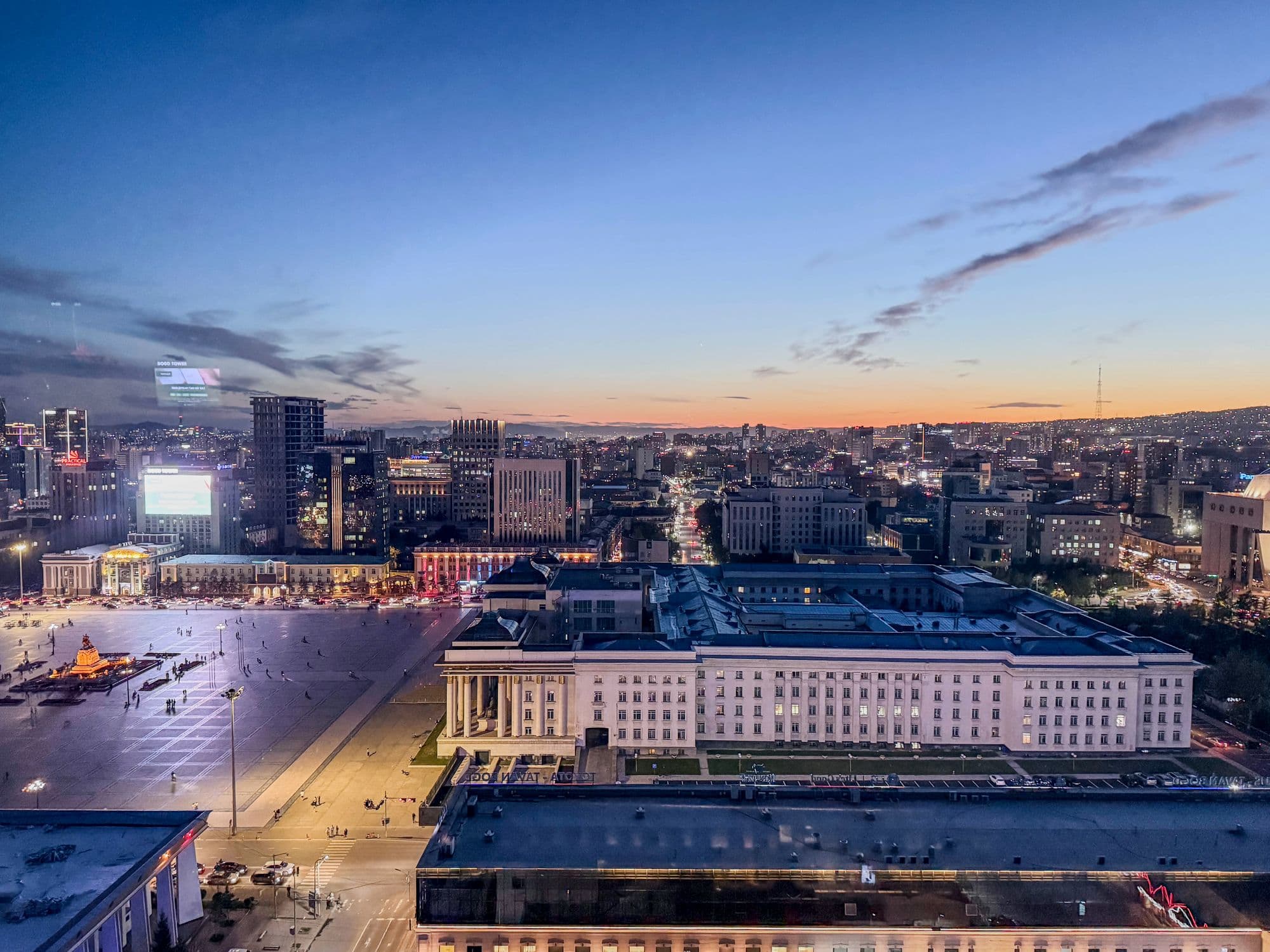
Mongolia's capital holds about 1.79 million people, roughly half the country, in a long valley on the Tuul river at around 1,300 m. It began in 1639 as a movable Buddhist monastic camp that shifted location 29 times before settling permanently on this spot in 1778, and took its present name in 1924. By mean annual temperature it is the coldest national capital in the world. For travellers it is less a destination than the hinge of every central-Mongolia trip: the museums that explain what you are about to drive through, the permits, the drivers and the last reliable ATM.
- Best months
- Jun–Sep