Thirteen shapes of trip, with the day counts and price bands operators publish.
This directory describes; it does not rate. Entries come from each operator’s own published pages. Check prices and terms with the operator before booking.
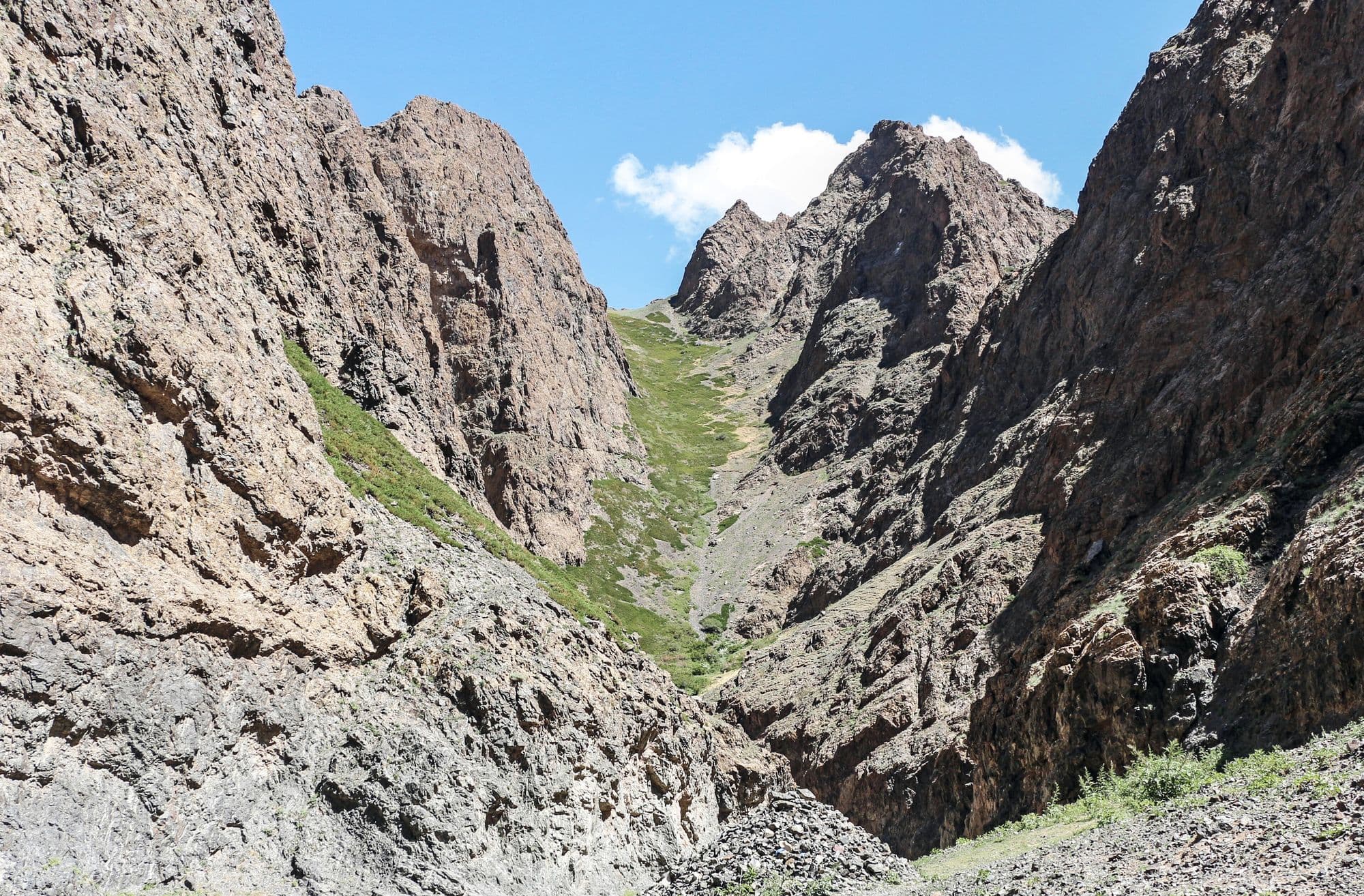
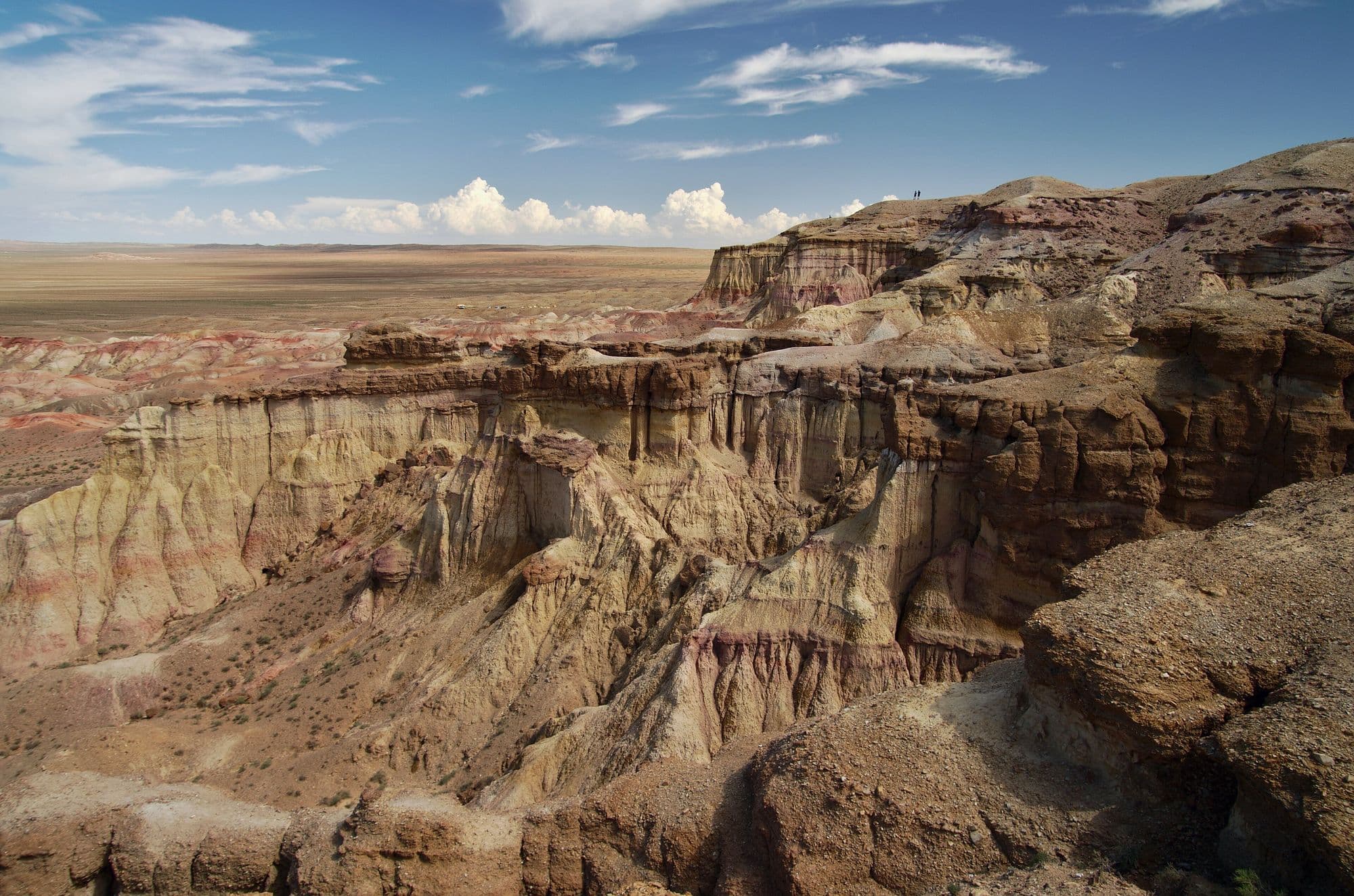
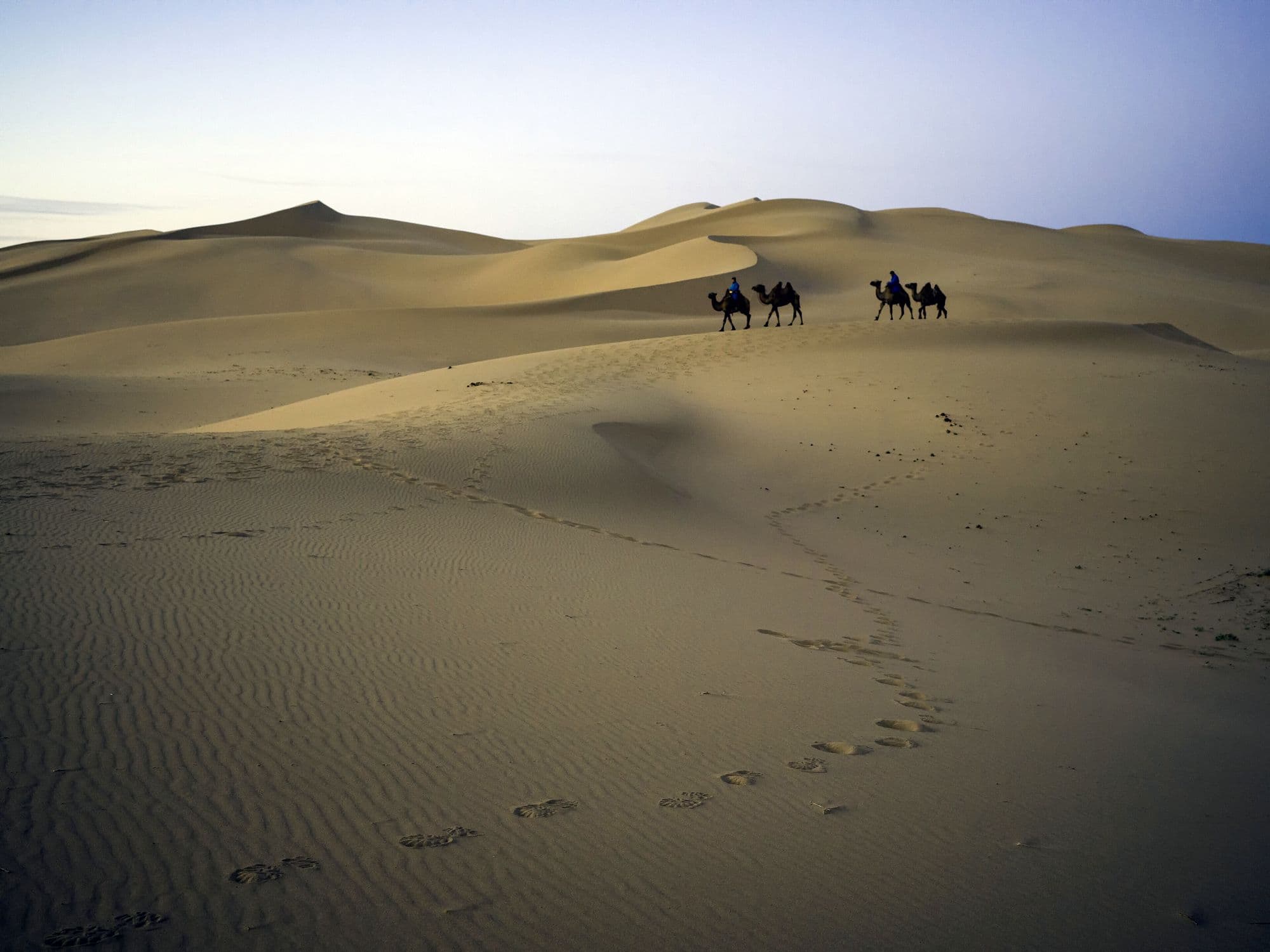
The single most-sold Mongolian route: a loop through the South Gobi that strings together the ice-filled Yolyn Am gorge, the Khongoryn Els dune field and the red sandstone of Bayanzag, usually with a camel ride and a nomad-family visit built in. Operators sell it two ways — overland from Ulaanbaatar, which costs a long 8-9 hour driving day at each end, or with a domestic flight to Dalanzadgad that buys back roughly two days. Nights are in tourist ger camps with shared Western-style washblocks; the vehicle is a van or 4WD, not a coach. Four to six days is the normal length, and almost every operator warns that adding a day is better than compressing it.
A short loop west and north of Ulaanbaatar that covers the imperial capital at Kharkhorin, the Erdene Zuu monastery, steppe lakes and the Przewalski's horse reserve at Khustai, with a sand-dune stop at Elsen Tasarkhai that gives a taste of desert without the Gobi's distances. It is the standard answer for travellers with five or six days who want history and grassland rather than desert. Roads are a mix of paved highway and dirt track, and daily stages are short by Mongolian standards. Most versions include a camel ride, a night or two of horse riding, and at least one nomad-family visit.
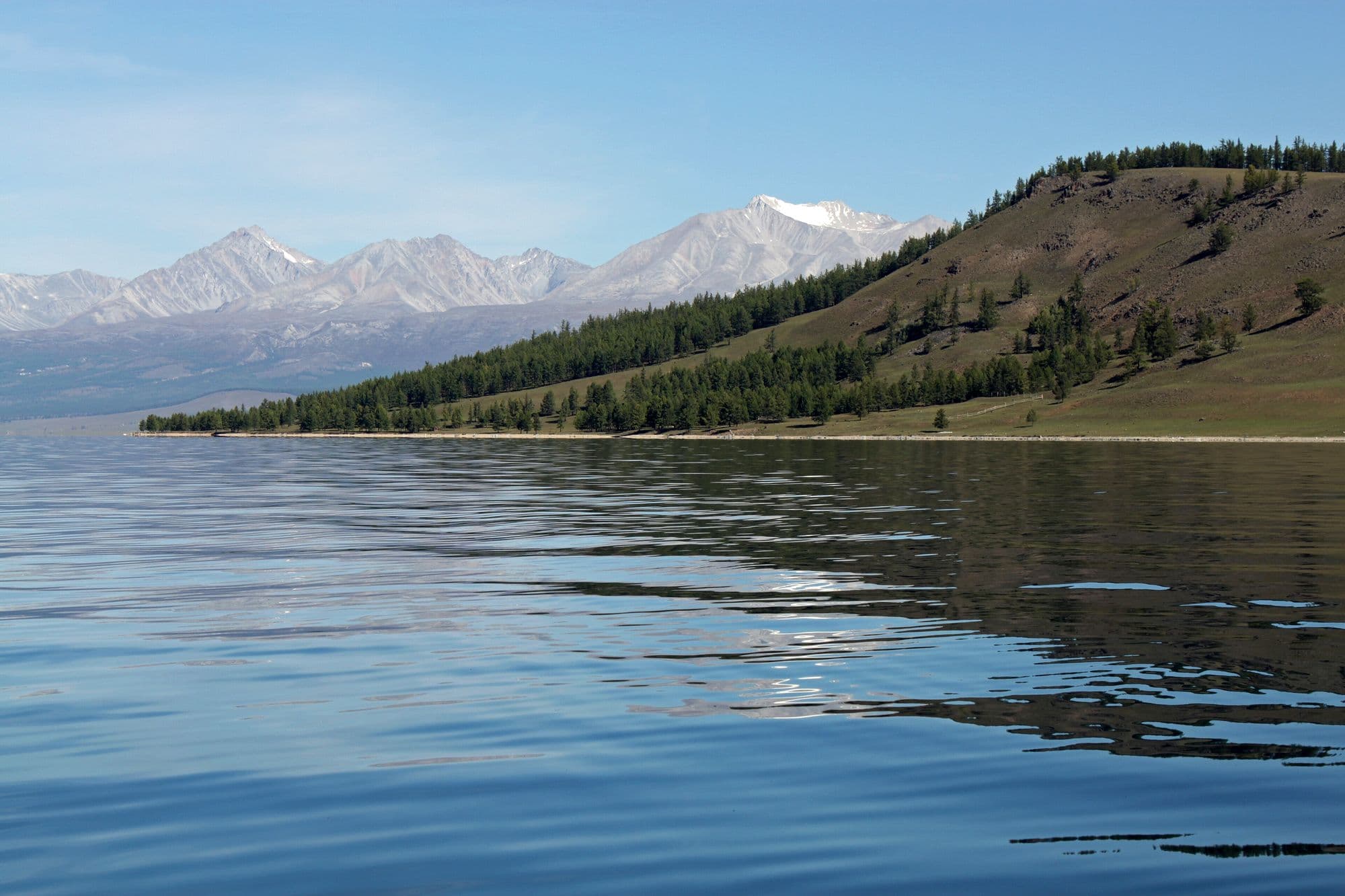
Mongolia's deep alpine lake in the far north, ringed by larch forest and mountains, reached either by a 1.5-hour flight to Murun or by two long driving days from Ulaanbaatar. Trips centre on the lakeshore itself: boating, hiking, horse riding along the water, and Bronze Age deer stones at Uushgiin Uvur near Murun. Short fly-in versions run three days; the more common shape folds Khuvsgul into a longer northern and central circuit of ten to thirteen days. It is the cool, green counterweight to the Gobi and the usual gateway for reindeer-herder side trips.
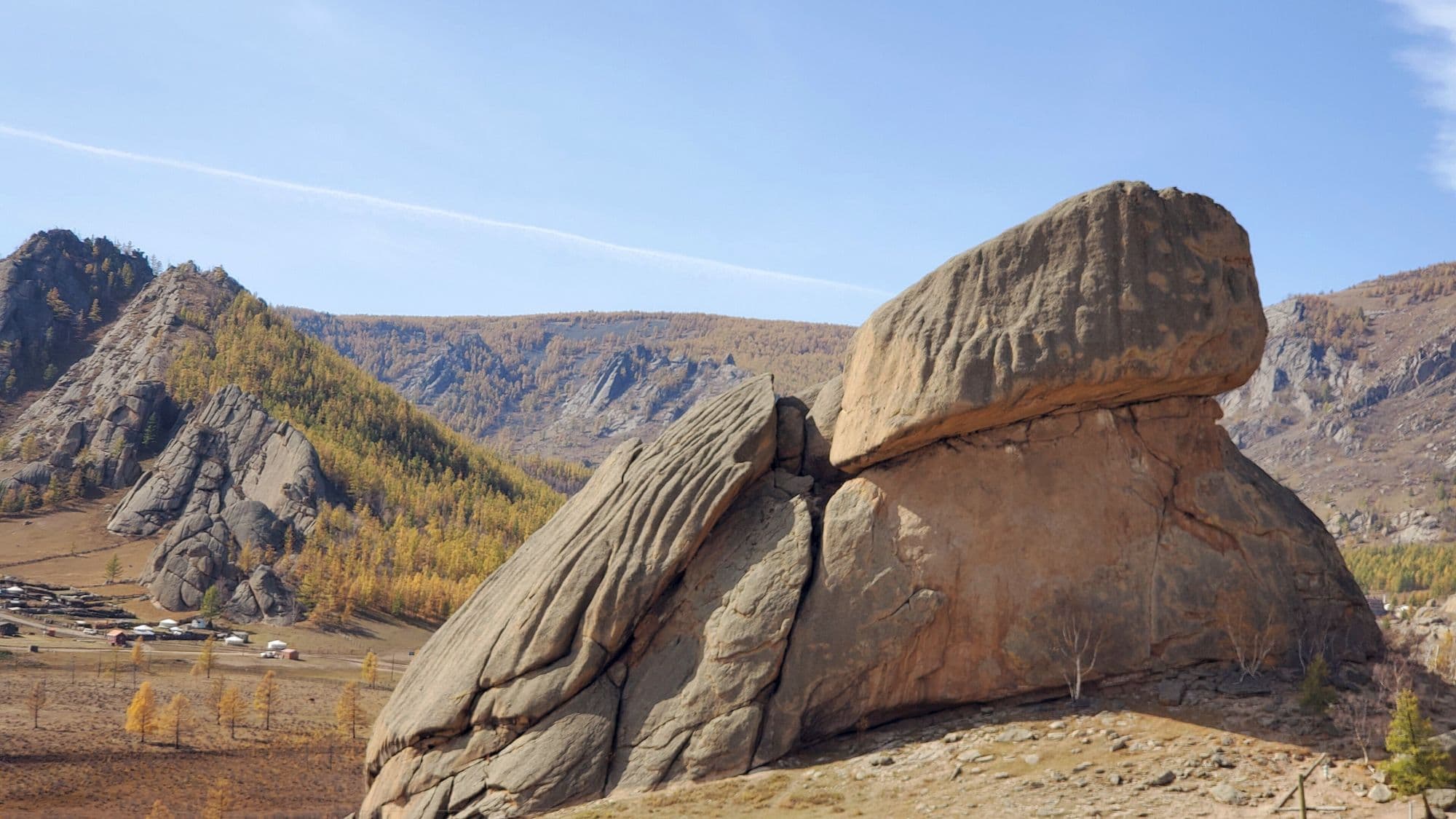
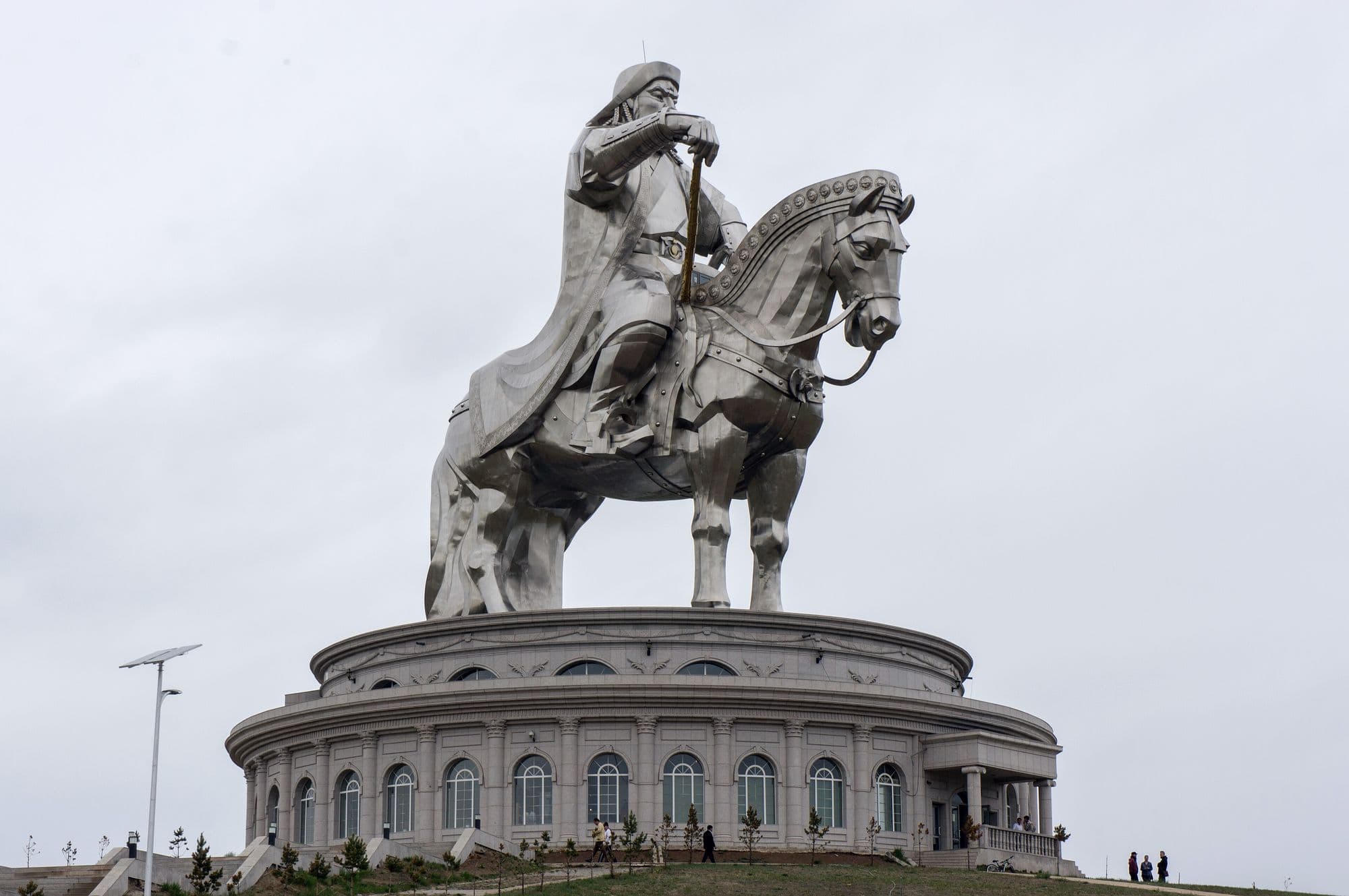
The two- to three-day trip almost every visitor with a stopover takes: the giant Chinggis Khaan equestrian statue on the road east, then Gorkhi-Terelj National Park for Turtle Rock, the Aryabal meditation temple and an hour in the saddle, with one night in a ger. Some versions swap in Khustai National Park for the Przewalski's horses or add a half-day hike on Bogd Khan mountain past the Manzushir monastery ruins. Distances are short and much of the road is paved, so it works as a weekend add-on rather than an expedition. It is also the cheapest way to sleep in a ger and see steppe.
The classic ten-day overland: south from Ulaanbaatar through the White Stupa escarpment into the South Gobi for the gorge, the dunes and the Flaming Cliffs, then north across the steppe via the Ongi monastery ruins to Kharkhorin and Erdene Zuu before returning to the capital. It is a one-way traverse rather than an out-and-back, which is why it takes ten days and why nobody flies it. This is the itinerary most international operators treat as their flagship Mongolia trip, and the one travellers pick when they have two weeks but not three. Expect six consecutive nights in ger camps.
The two- to three-week circuit that links the South Gobi, central Mongolia and the northern lake country in one trip, usually with a domestic flight somewhere in the middle to avoid repeating a driving leg. Operators structure it in regional blocks of three or four days — desert, then the Orkhon and Kharkhorin, then Khuvsgul and sometimes the reindeer herders, then Ulaanbaatar. It is the only shape that covers desert, steppe, forest and lake in a single booking. Daily driving averages 200-250 km on mixed surfaces, so the length is driven by geography, not by the number of sights.
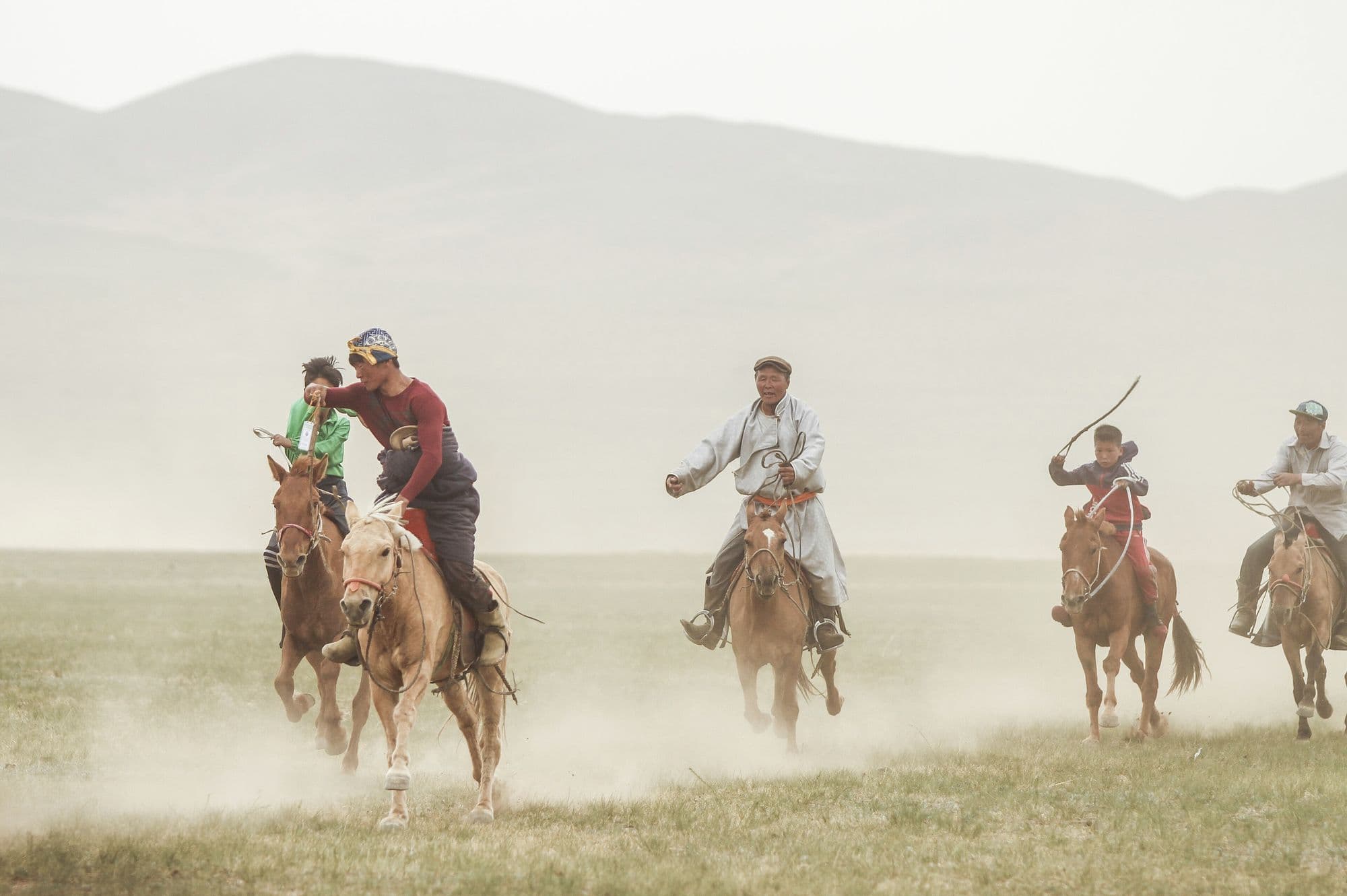
Mongolia's national festival, built on the three games of wrestling, horse racing and archery, and held from 11 to 13 July across the country; UNESCO inscribed it on the Representative List of the Intangible Cultural Heritage of Humanity in 2010. Tour versions pair the festival days in Ulaanbaatar or at a provincial Naadam with three or four days of countryside so the trip is not purely spectating. The horse races are held out of town on open steppe, not in the stadium, so itineraries usually split the days. Because dates are fixed, this is the one route where booking early genuinely matters.
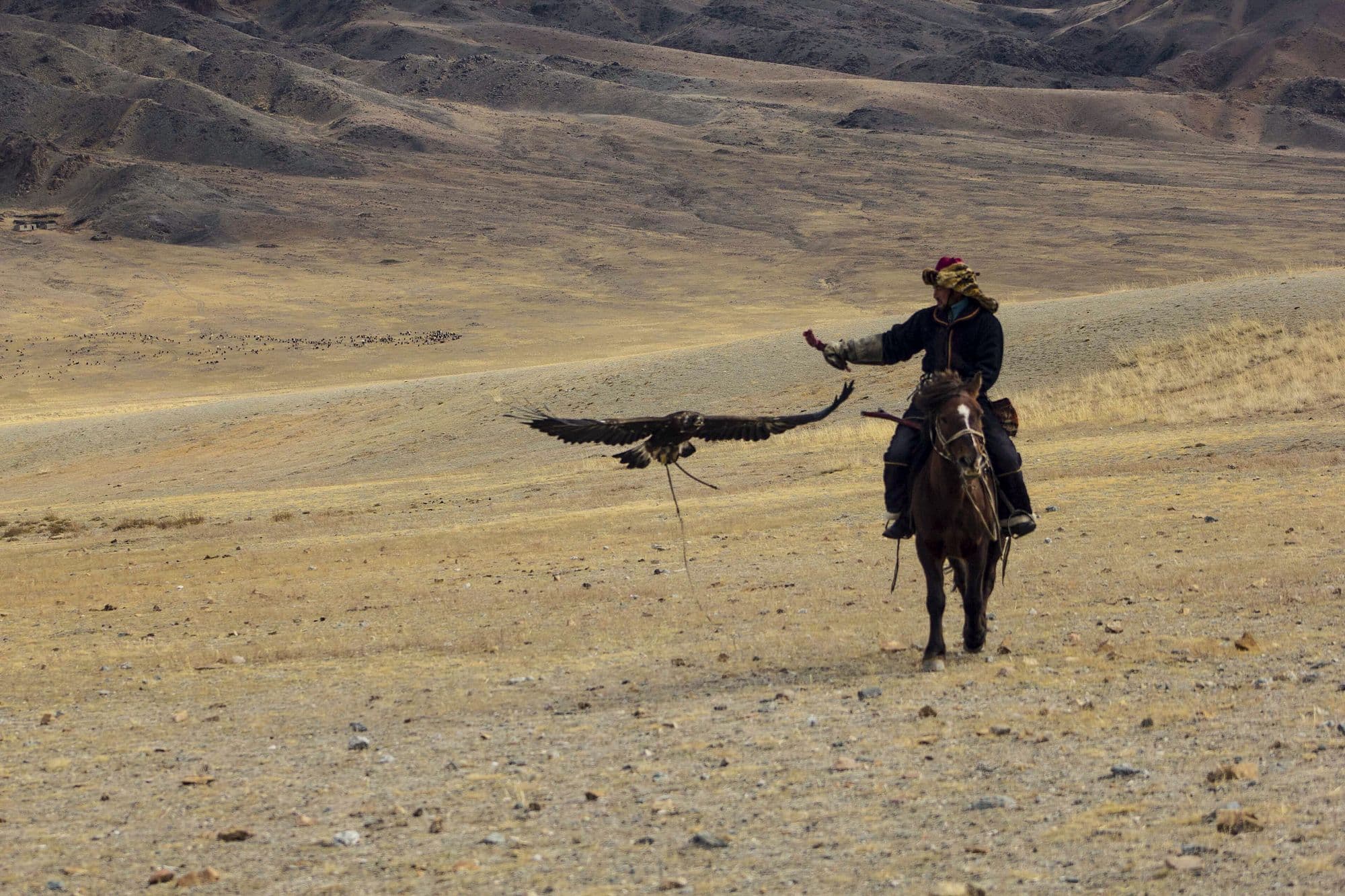
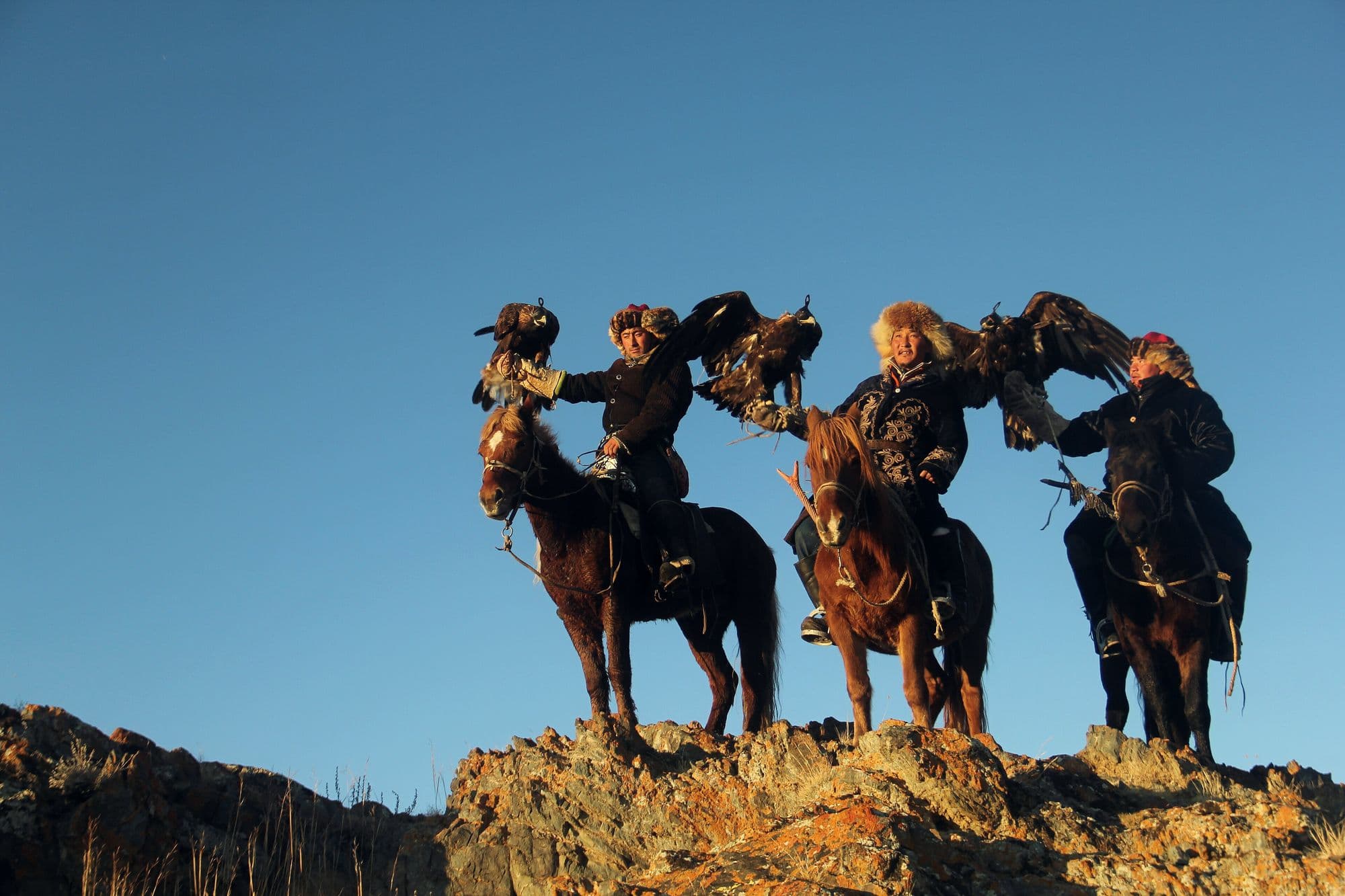
A trip to the far west, to Bayan-Olgii province, where Kazakh hunters compete with trained golden eagles in autumn. There are two distinct events: the Sagsai festival in September and the larger Olgii festival at the start of October, and operators sell separate departures for each. Every version flies from Ulaanbaatar to Olgii rather than driving, because the province is about 1,700 km from the capital. Around the festival days, itineraries add a stay with an eagle-hunting family and usually a day in Terelj on the Ulaanbaatar side.
Mongolia's high-mountain trip, in Altai Tavan Bogd National Park on the Chinese and Russian border, built around the Potanin glacier and the Khuiten peak massif at about 4,374 m, with the Khoton and Khurgan lakes and Bronze Age petroglyph galleries at Shiveet Khairkhan on the approach. Access is by domestic flight to Olgii and then a long 4WD day to the park. Nights split between local gers, tourist camps and tents, and camels or horses usually carry gear on the glacier approach. Short six-day versions exist, but ten days upward is what serious trekkers book.
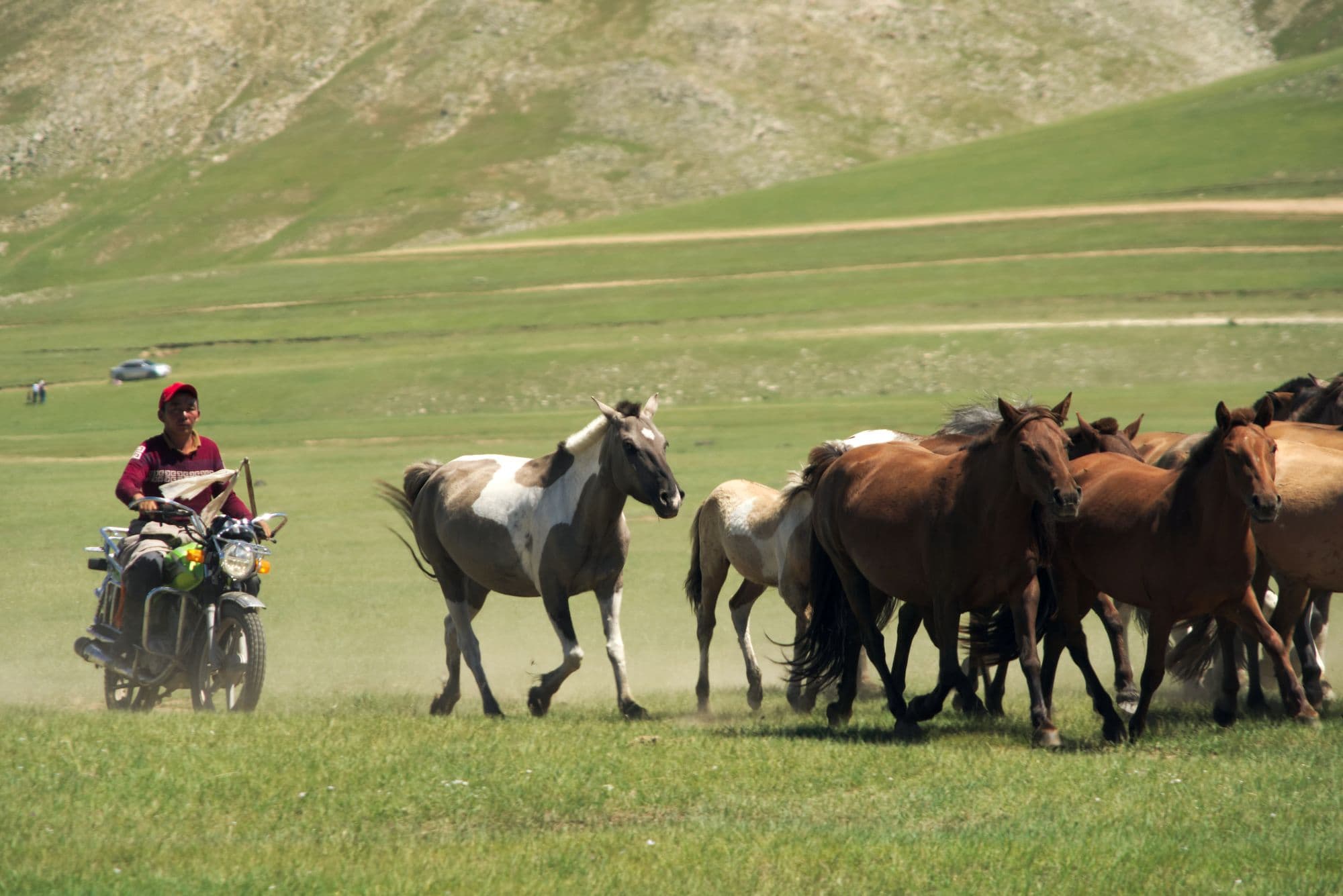
Multi-day riding on Mongolian horses, most often in the Orkhon valley and Khangai mountains or in the river country east of Ulaanbaatar. Trips run from a week to a fortnight and mix full riding days with support vehicles carrying the gear, so a tent camp is set up ahead of you. The long Orkhon version threads Ogii Lake, the Khar Balgas ruins, Karakorum, the cliff-top Tuvkhun monastery and the Ulaan Tsutgalan waterfall. Operators sell these as suitable for beginners, but a full riding day on a wooden Mongolian saddle is not a pony ride.
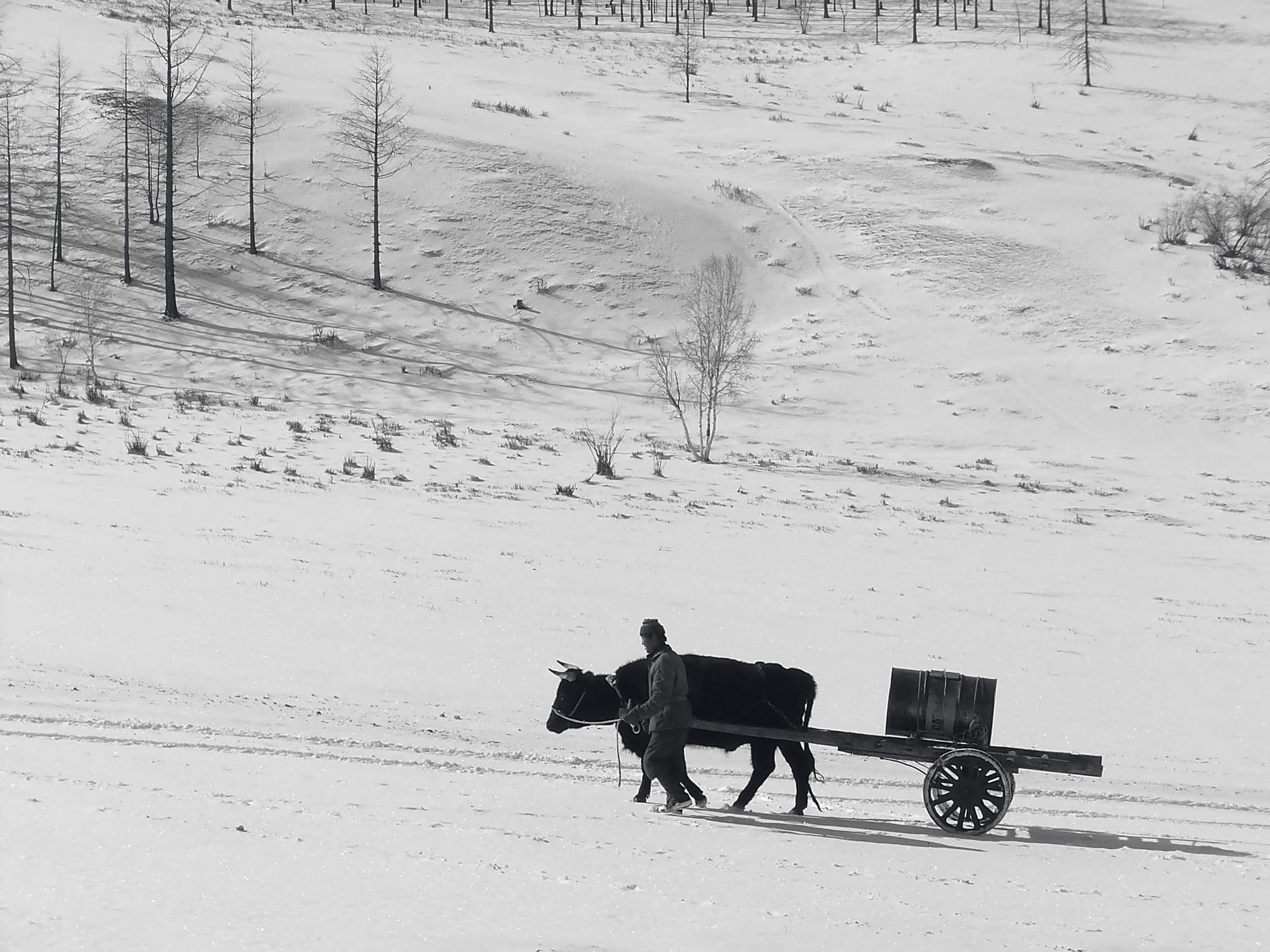
Two quite different products share this label. The short one is a four- or five-day loop from Ulaanbaatar to Khustai and Terelj with a night in a herder family's ger and a day at the Sky Resort ski slope, sold cheaply because it is low season. The long one is an eleven-day northern expedition to the frozen Khuvsgul lake and the reindeer herders' winter camps, with horse sledding on the ice, and operators grade that one Hard. Winter is the only time some of these landscapes are accessible by driving across frozen lakes and rivers, and the only time prices fall.
Not really a separate route so much as a way of framing a Gobi or steppe trip around the night sky. The South Gobi has almost no artificial light, very dry air and high elevation, which gives stable seeing and a Milky Way bright enough that many visitors say they are seeing it properly for the first time. In practice operators sell it as a standard Gobi or Terelj itinerary with camps chosen away from settlements and late dinners so the group is outside after full dark. Japanese agencies in particular market the starry sky as the headline feature rather than an extra.
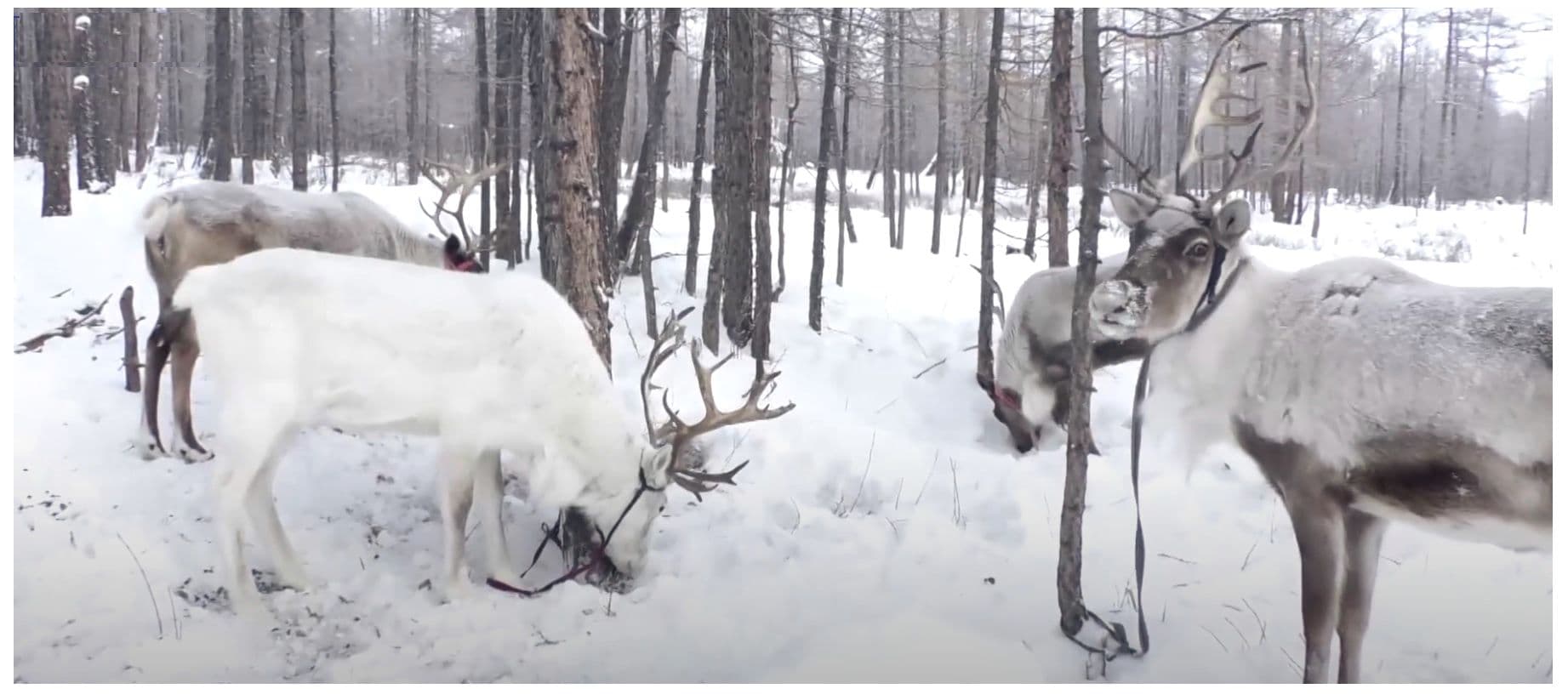
A trip to the Dukha or Tsaatan reindeer herders in the taiga above the Darkhad depression, in the far north near the Russian border. The standard shape flies to Murun, drives a full day to Tsagaan Nuur, then rides horses for two days into the forest to reach a herding camp, stays a day, and rides back out. The forest leg cannot be driven, so horses and tents are not optional extras — they are the route. Most operators pair it with two or three days at Khuvsgul Lake on the way back, and a border-area permit is required.