Dundgovi (Дундговь)· Бага газрын чулуу
Baga Gazriin Chuluu
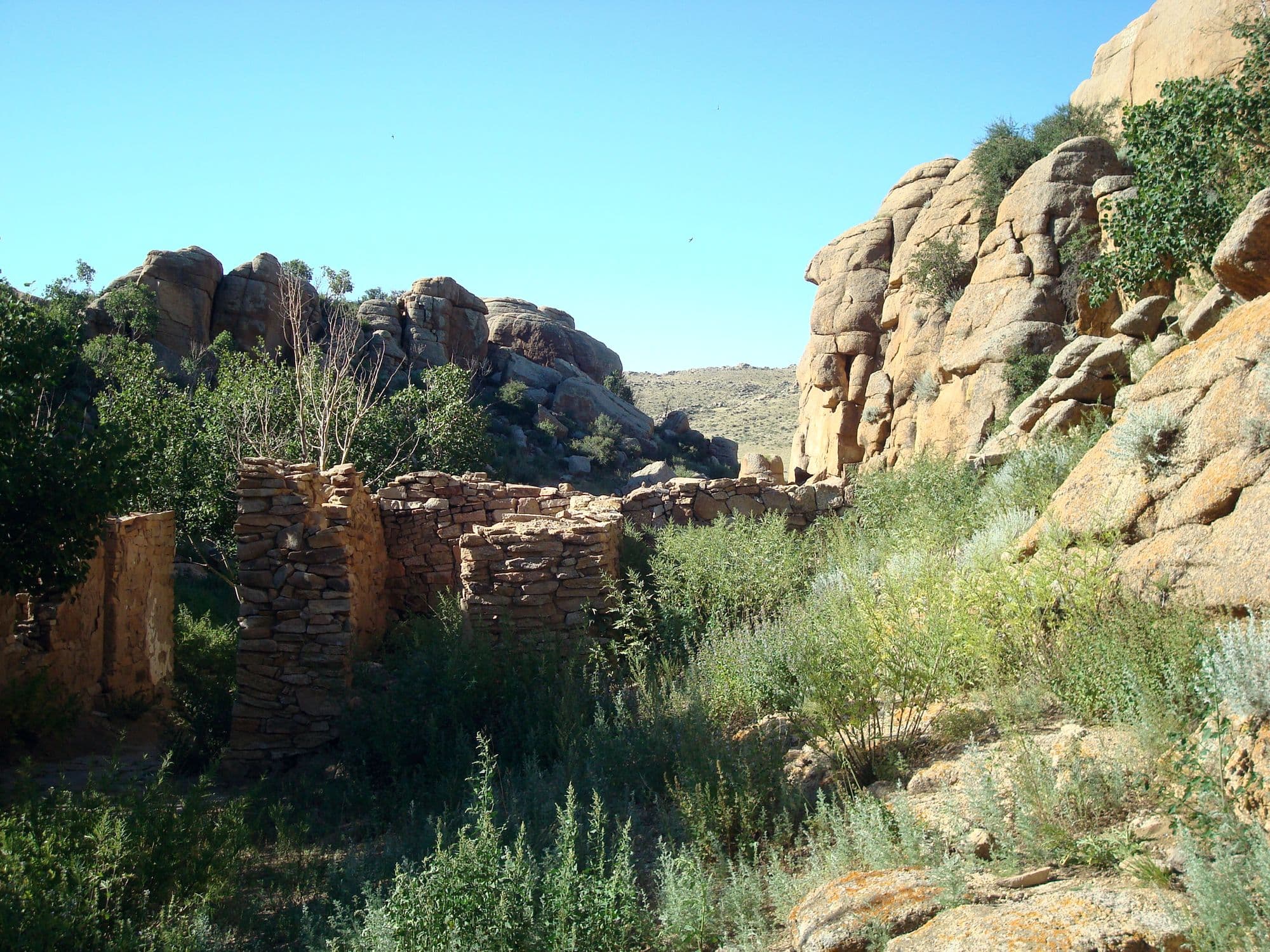
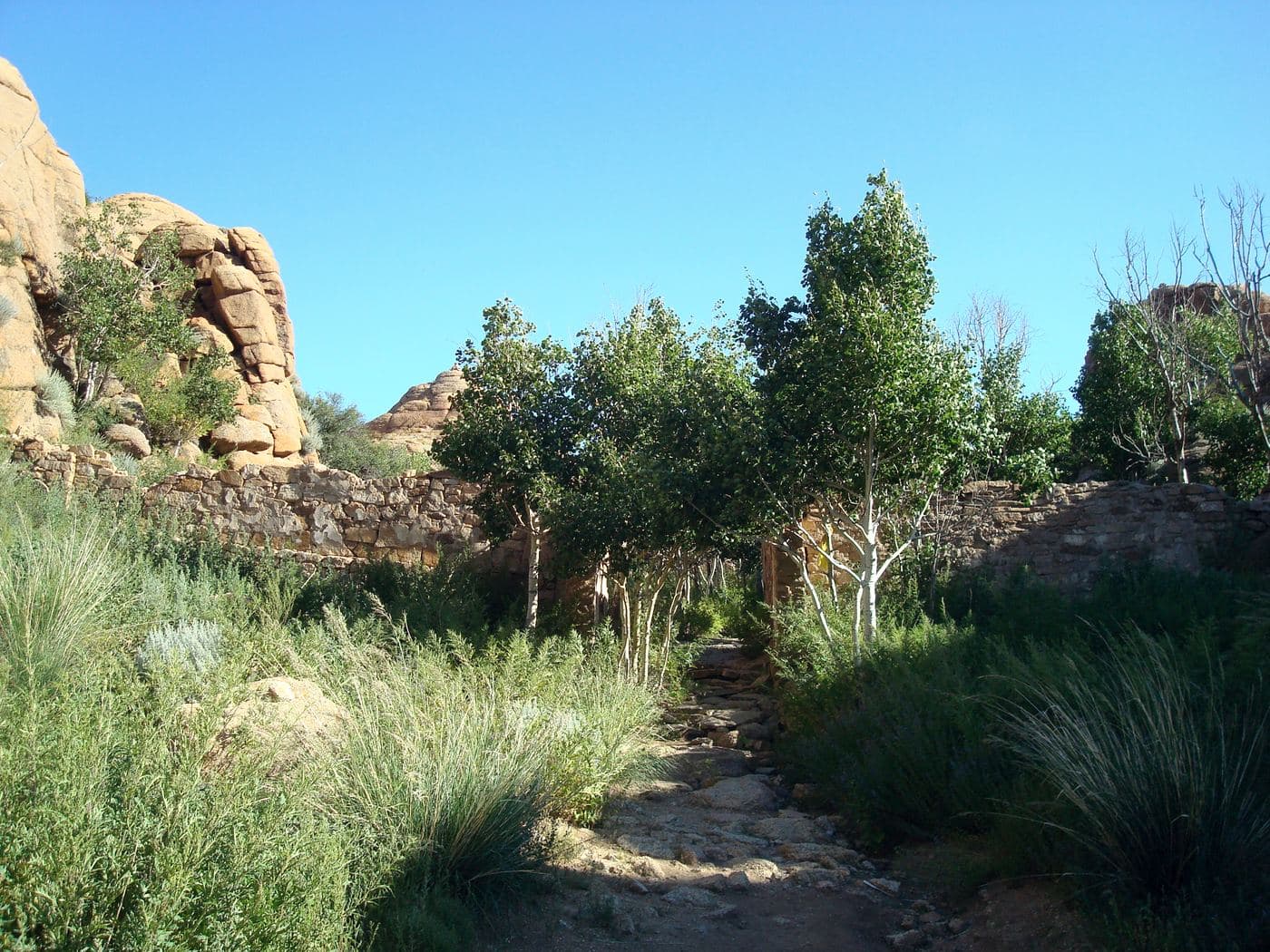
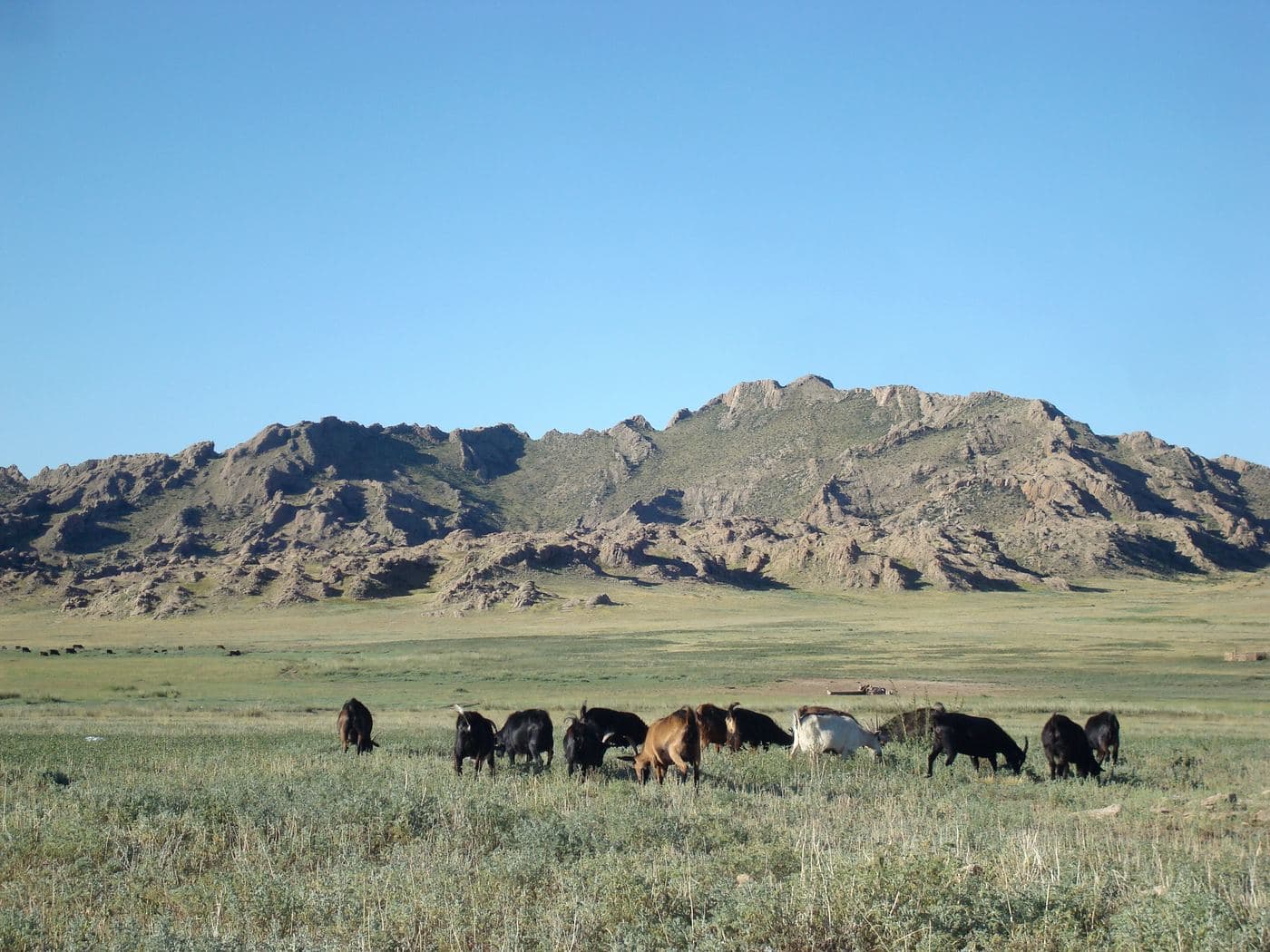
Baga Gazriin Chuluu is a granite massif standing out of the steppe in northern Dundgovi, a jumble of weathered boulders, tors and narrow rock corridors that looks nothing like the sand-and-gravel Gobi people expect. Because it is only four or five hours from Ulaanbaatar on mostly paved road, it is the usual first night on a Gobi loop and the first proper taste of the desert edge. The rocks hold the ruins of a stone temple, a cave, rock carvings and a spring that Mongolians visit for their eyes. It rewards a slow walk more than a photo stop.
- From Ulaanbaatar
- 278 km
- Drive time
- 4-5 hours
- Altitude
- 1,523 m
- Typical stay
- 1 night, almost always the first night out of Ulaanbaatar
- Best months
- May–Sep
- Jan: not a best month
- Feb: not a best month
- Mar: not a best month
- Apr: not a best month
- May: a best month
- Jun: a best month
- Jul: a best month
- Aug: a best month
- Sep: a best month
- Oct: not a best month
- Nov: not a best month
- Dec: not a best month
Highlights
- Scrambling among the granite tors and squeezing through the rock corridors
- Ruins of an old stone temple among the boulders, associated with the 17th century
- The 'eye spring', a small rock seep Mongolians wash their eyes in for its reputed healing
- Petroglyphs and rock carvings on the massif
- Caves in the granite used by meditating monks
- Climbing to a high point for the view over the massif and out to the steppe
- Wild sheep monument on the approach
- Night skies with no settlement light, and easy dark-sky access straight from camp
Season notes
May to September. It sits higher and further north than the deep Gobi, so it is noticeably cooler and greener in June, and it catches wind. July and August are warm but not extreme. Late September nights drop below freezing and camps begin to close. Spring dust storms blow through here too.
From Ulaanbaatar
Paved highway south from Ulaanbaatar towards Mandalgovi for most of the distance, then roughly 20-30 km of gravel and dirt track east into the massif. This is the easiest of the Gobi sites to reach and doable in a single morning.
By air
None. The site is a road destination; no airstrip serves it, and its whole appeal is that it is a short drive from Ulaanbaatar.
Where to stay
- Several ger camps sit right at the edge of the massif (Bayangol camp and others mapped in OpenStreetMap)
- Standard tourist ger camp: roughly USD 40-70 per person per night including three meals (2026)
- En-suite or deluxe ger camp: roughly USD 80-150 per person per night including meals (2026)
- Nomad family ger homestay in the surrounding sums: roughly USD 20-40 per person per night including meals (2026)
Be aware
Sources (5)
- Бага газрын чулуу - Mongolian Wikipedia — Dundgovi location and the 1,768 m elevation figure
- Адаацаг сум - Mongolian Wikipedia — The 1,768-1,803 m elevation range, Adaatsag sum being 210 km from Ulaanbaatar and 104 km from the aimag centre, and the caves and springs of the area
- Discover Mongolia - Baga Gazriin Chuluu — Adaatsag sum, the granite stone mountains, the old temple ruins linked to the 17th century and the eye spring
- OpenStreetMap - Baga Gazrin Chuluu attraction, eye spring, petroglyphs and Bayangol camp — Visitor coordinates, the eye spring and petroglyph locations, the wild sheep monument and the ger camps
- OpenTopoData SRTM 30 m elevation dataset — Elevation at the visitor point
Often combined with
Tsagaan Suvarga (White Stupa)
Dundgovi · 445 km
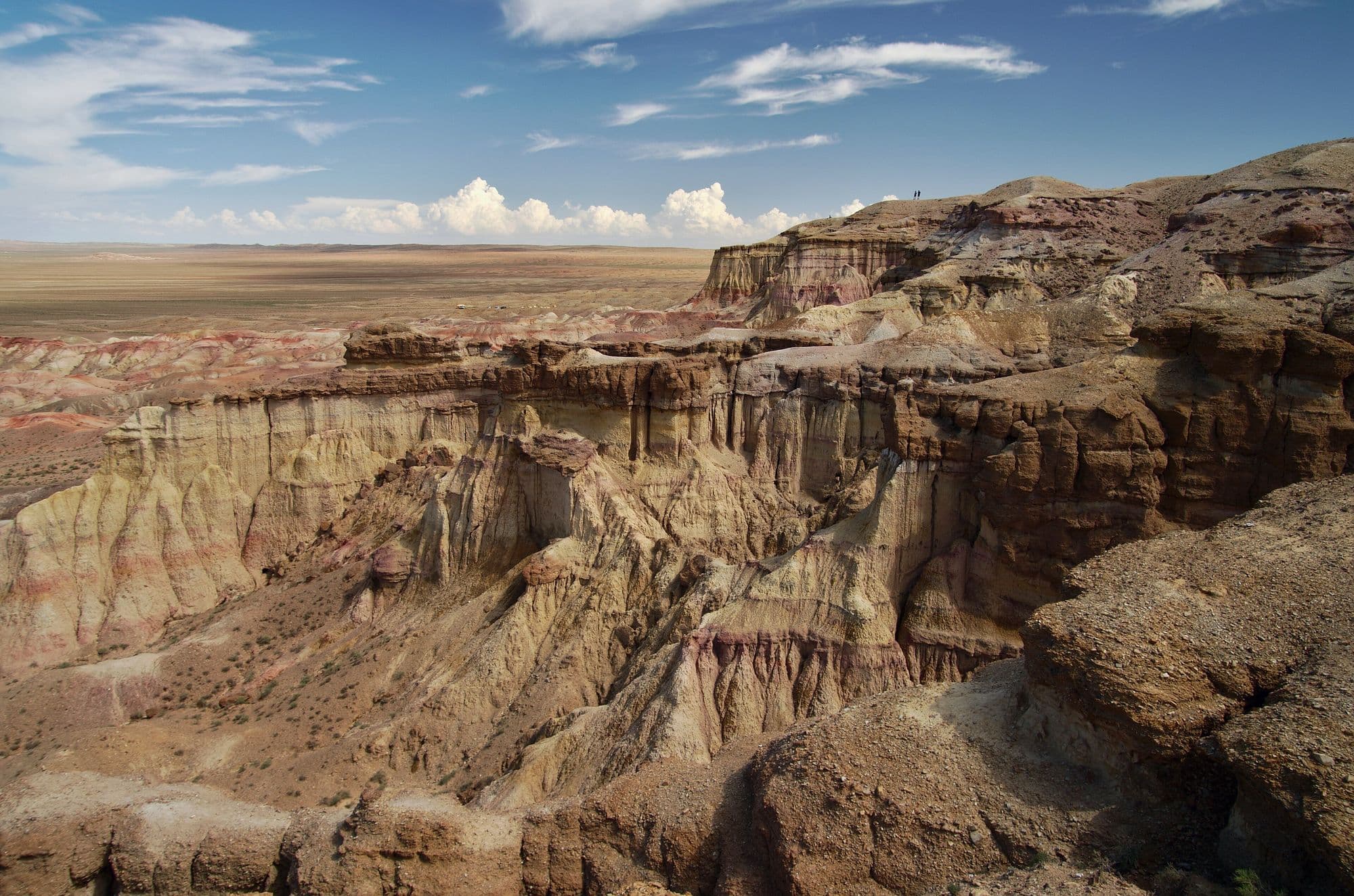
Tsagaan Suvarga is the eroded edge of an old lake-bed plateau in the south of Dundgovi, where the ground simply stops and drops away into a wall of banded sediment. Seen from the plain below, the columns and buttresses look like a row of pale stupas, which is where the Mongolian name comes from. The colours run from chalk white through pink and ochre to rust, and they shift completely between morning and late afternoon light, so most visitors time their stop for one end of the day. It is usually a half-day stop rather than a destination in itself, on the overland route between the Dundgovi sites and the deep Gobi.
- Best months
- May–Sep
Ongi Monastery (Ongiin Khiid)
Dundgovi · 528 km
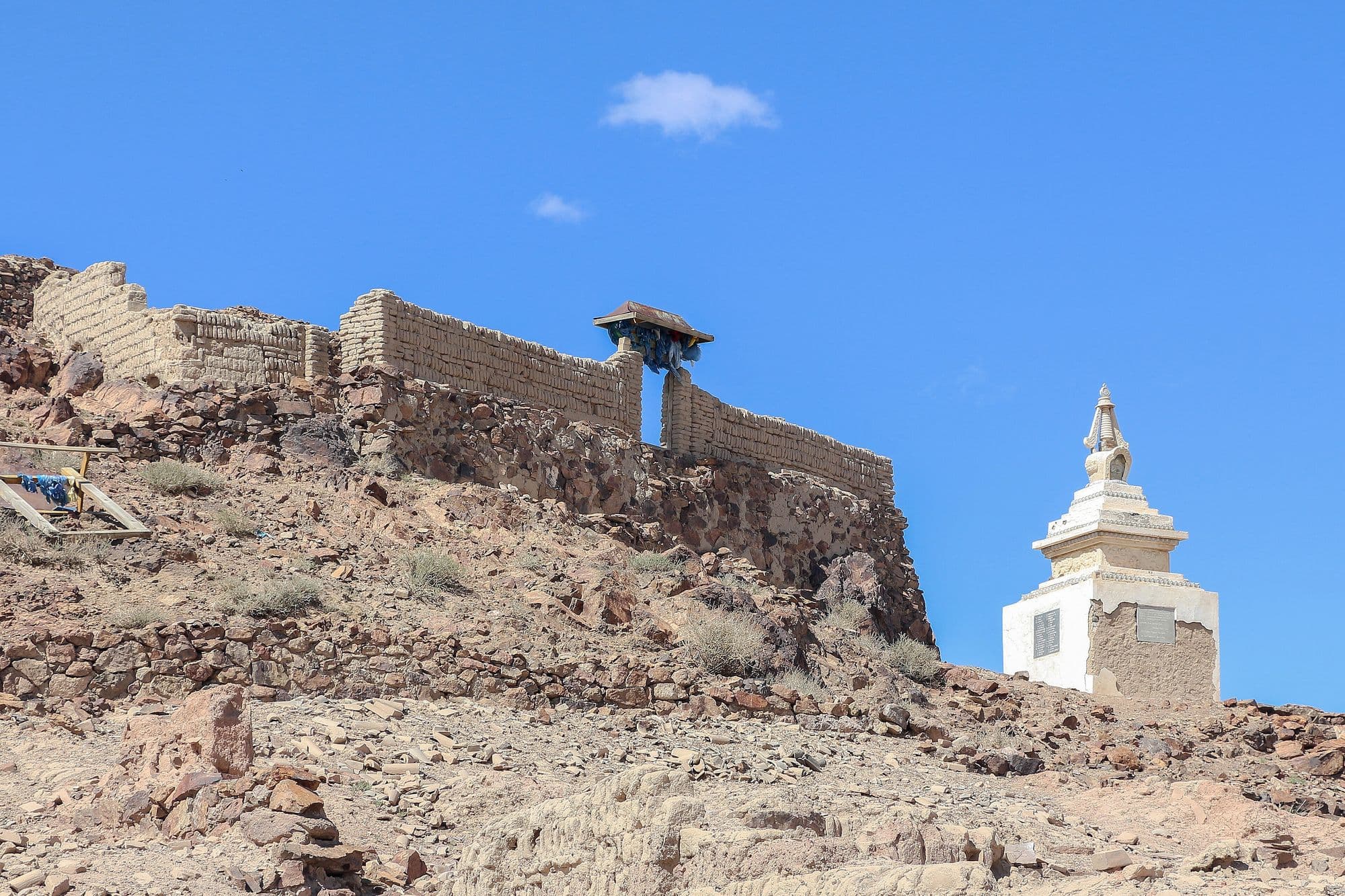
Ongi is the ruin of what was once one of the largest monastic complexes in Khalkha Mongolia, spread across both banks of the Ongi river at the foot of Saikhan-Ovoo mountain. It grew from the late 18th century into a centre of over a thousand monks with separate colleges for philosophy, tantra, medicine and mathematics, and it was destroyed in the Stalinist purges of the 1930s. What remains is a field of broken walls, foundations and standing stupas, with one small temple rebuilt since the 1990s and a handful of monks again in residence. It sits almost exactly where a Gobi loop needs a night, and the contrast between the scale of the ruins and the emptiness around them is the point.
- Best months
- May–Sep
Yolyn Am (Vulture's Gorge, often 'Eagle Valley')
Ömnögovi · 624 km
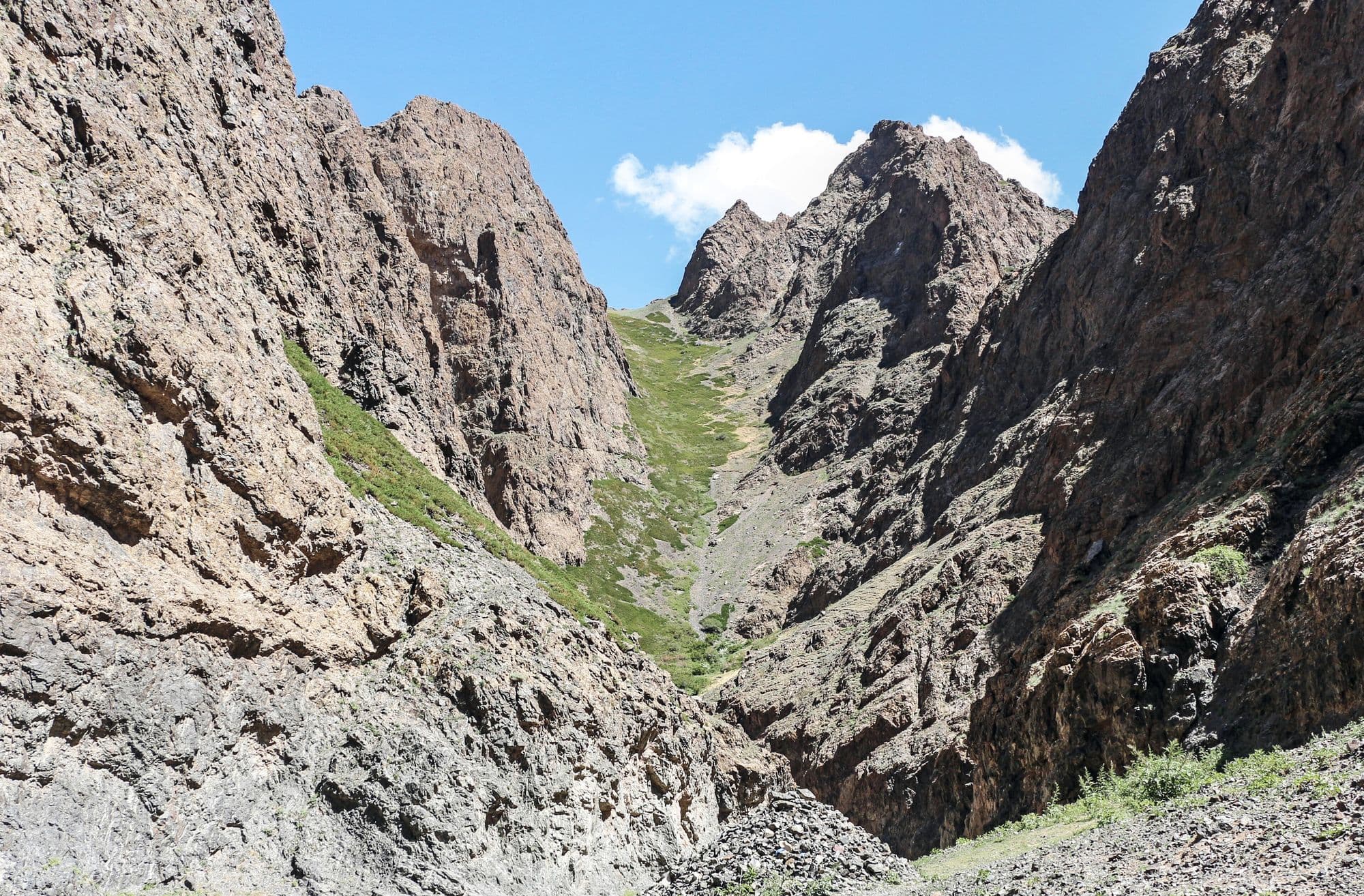
Yolyn Am is a narrow gorge cut into the Zuun Saikhan range inside Gobi Gurvansaikhan National Park, and it is the one place in the South Gobi where the desert stops feeling like desert. The walls close to a few metres apart, a stream runs along the floor, and for much of the year a sheet of ice sits in the shaded narrows. It is named after the yol, the bearded vulture that nests on the cliffs above. Visitors park at the mouth, pass a small natural history museum, and walk or ride a horse a few kilometres up the valley to the ice.
- Best months
- May–Sep