Töv· Чингис хааны морьт хөшөө
Genghis Khan Equestrian Statue, Tsonjin Boldog
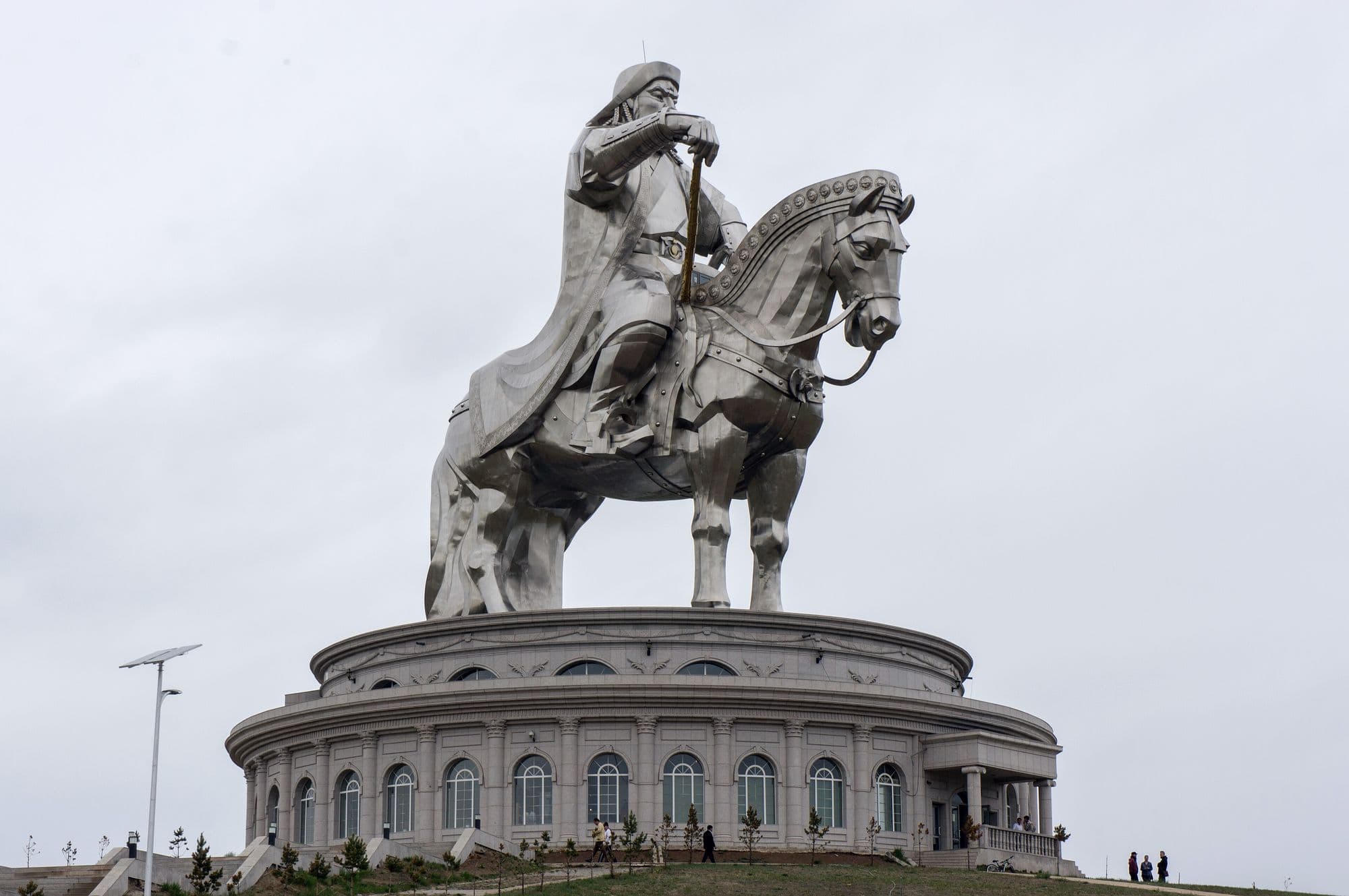
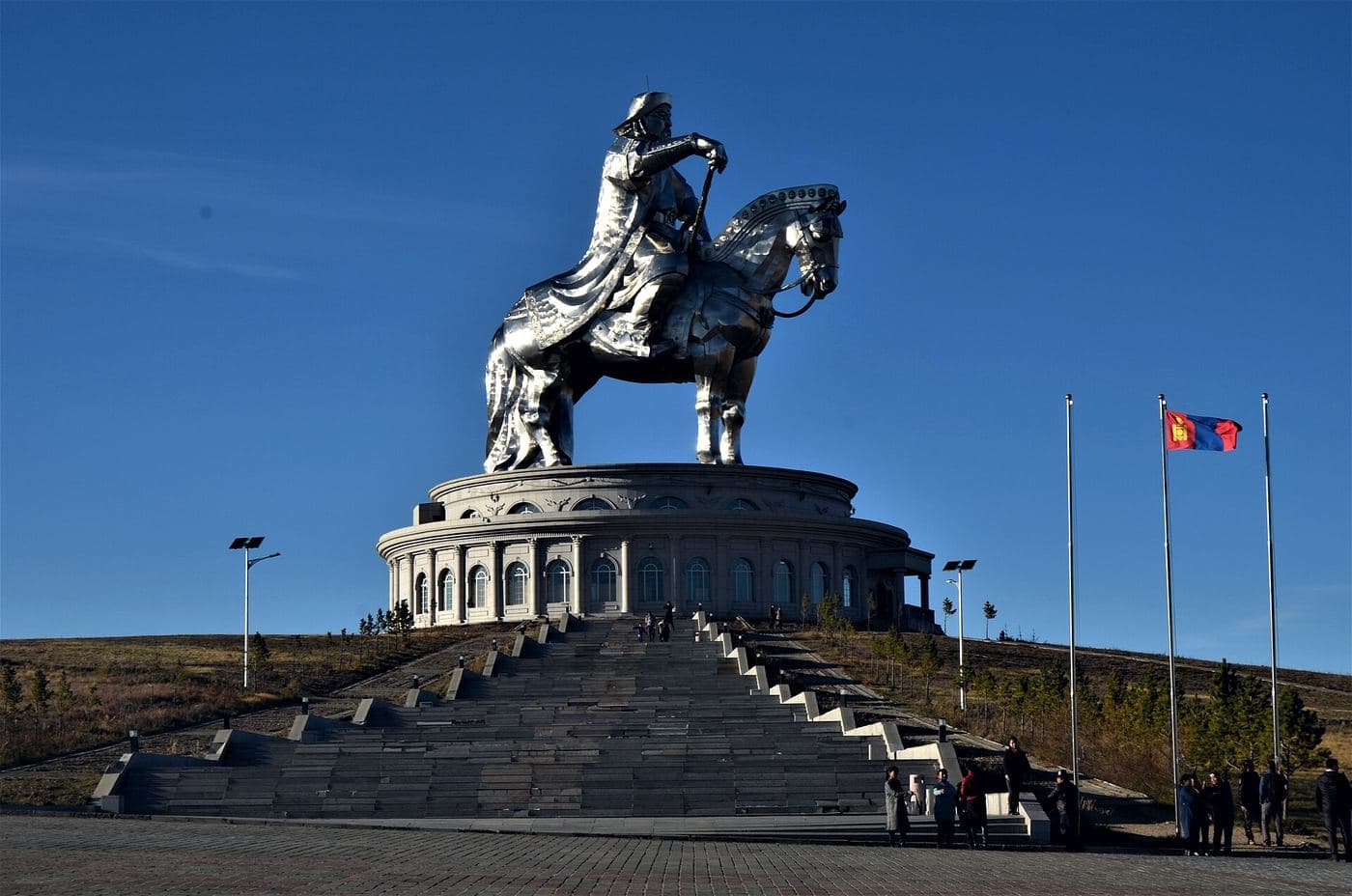
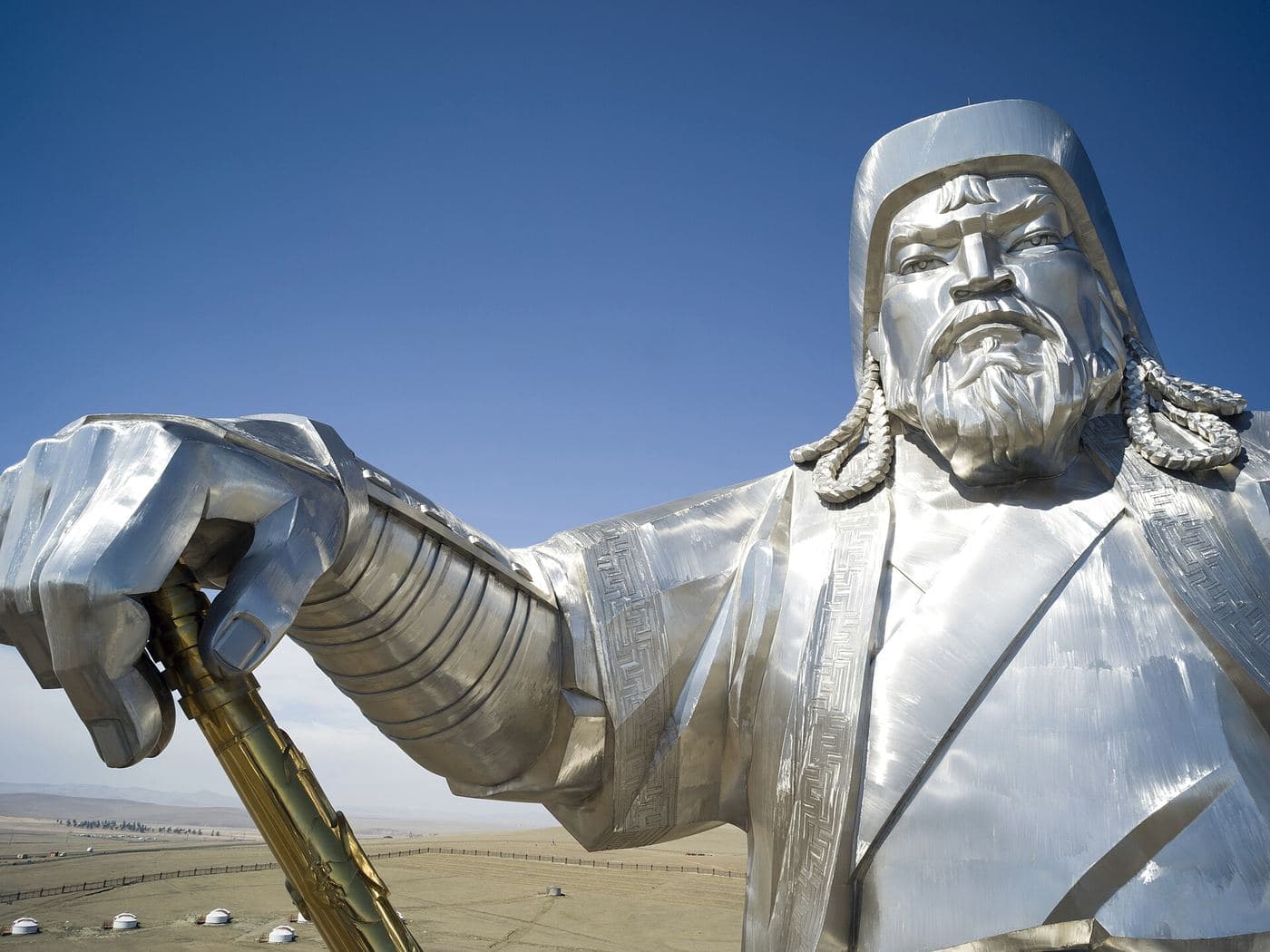
A 40-metre stainless-steel Genghis Khan rides out of the steppe on the south terrace of the Tuul river at Tsonjin Boldog, the place legend says he found a golden whip. It is the tallest equestrian statue in the world, opened on 26 September 2008 for the 800th anniversary of the founding of the Mongol Empire. Visitors climb up through the horse's chest and neck to a viewing platform on its head, looking out over the rider's face and the open country beyond. The 10-metre building it stands on has 36 columns, one for each khan from Genghis to Ligdan.
- From Ulaanbaatar
- 54 km
- Drive time
- about 1
- Altitude
- 1,509 m
- Typical stay
- 0 - it is a half-day trip from Ulaanbaatar, usually combined with Terelj
- Best months
- May–Sep
- Jan: not a best month
- Feb: not a best month
- Mar: not a best month
- Apr: not a best month
- May: a best month
- Jun: a best month
- Jul: a best month
- Aug: a best month
- Sep: a best month
- Oct: not a best month
- Nov: not a best month
- Dec: not a best month
Highlights
- Riding the lift and stairs up through the horse to the deck on its head, level with Genghis Khan's face
- The 36-column base building, one column per khan from Genghis to Ligdan
- The oversized Mongol boot in the base hall, a standard photo stop
- Dressing in Mongol costume for photographs at the base
- Views east over the Tuul terrace, the direction the statue deliberately faces - toward Genghis Khan's birthplace
- The museum and gift area inside the base
- Pairing it with Terelj, 30-40 minutes further north on the same trip
Season notes
Open year-round. The site sits on open steppe with no shelter, so it is wind-blasted most of the year and the viewing deck is brutally cold from November to March. There is little shade in midsummer. It works as a half-day trip in any month a normal car can make the drive, which is nearly all of them.
From Ulaanbaatar
Paved the whole way on the eastern highway through Nalaikh; the turn-off is signposted and the access road is sealed.
By air
None.
Where to stay
- Nobody stays here; ger camps in Gorkhi-Terelj, 30-40 minutes north, are the normal overnight
- A small hotel operates within the complex; no 2026 rate verified
Be aware
Sources (2)
- Equestrian statue of Genghis Khan - Wikipedia — 40 m height, 10 m base with 36 columns, distance 54 km, 2008 opening, USD 4.1 million cost, designers, world record, eastward orientation, access through the horse
- Чингис хааны морьт хөшөө - Монгол Википедиа — Tsonjin Boldog in Töv aimag, position on the south terrace of the Tuul, opening date 26 September 2008, 250 tonnes of steel, the alternative ~30 m figure for horse and rider
Often combined with
Gorkhi-Terelj National Park
Töv · 56 km
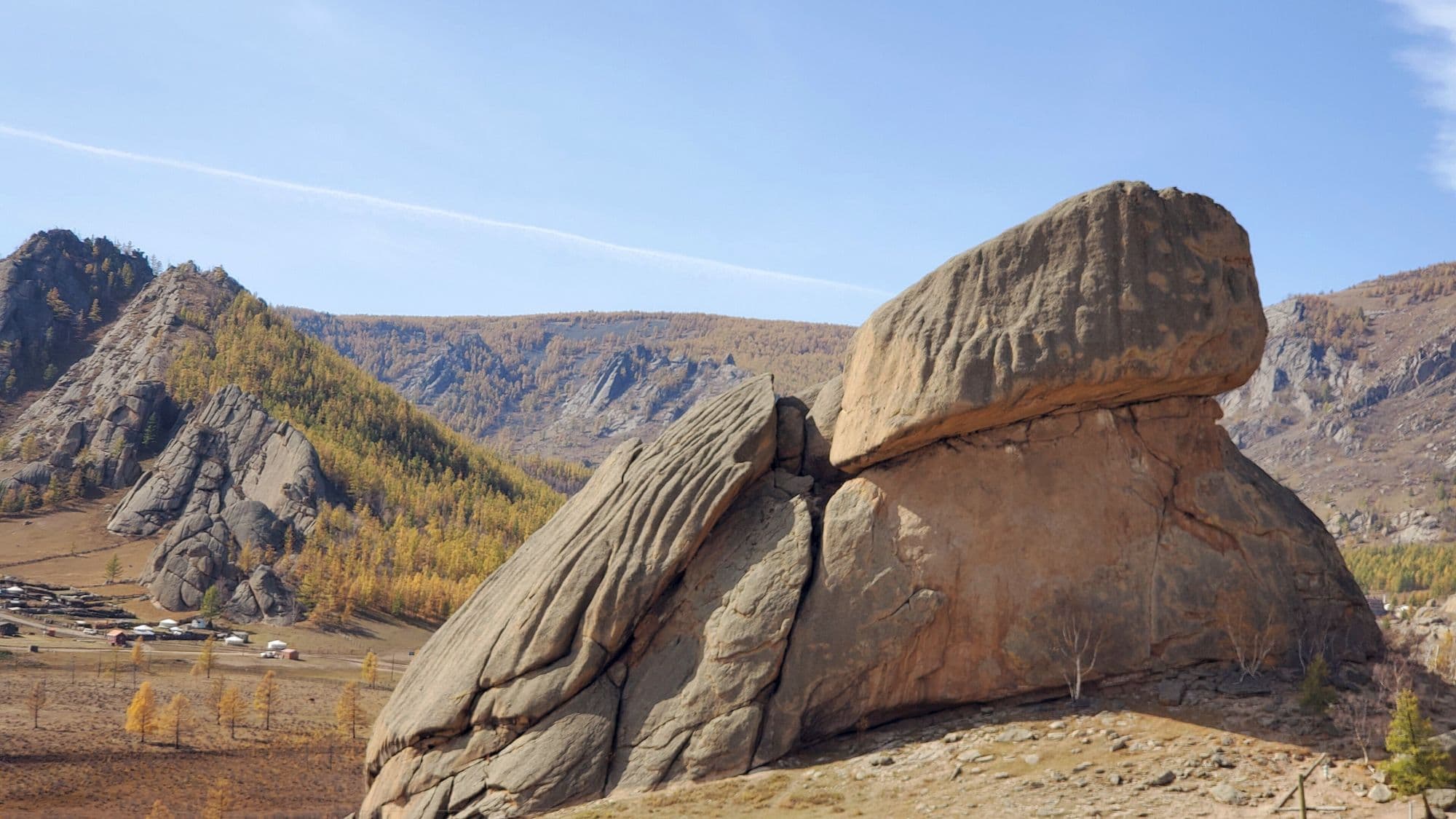
Terelj is the closest thing to real mountain country within an easy drive of Ulaanbaatar: weathered granite tors, larch and birch on the north-facing slopes, and the Terelj river winding through meadows in the south-western foothills of the Khentii. The park's name comes from the words for creek and rhododendron. Only a small southern strip is developed, with dozens of tourist ger camps, horse and camel hire, restaurants and souvenir stalls; beyond the Gorkhiin Davaa pass most of the park is roadless. It is the standard first or last night of a Mongolia trip, and the best place to try a ger without committing to two days in a van.
- Best months
- Jun–Sep
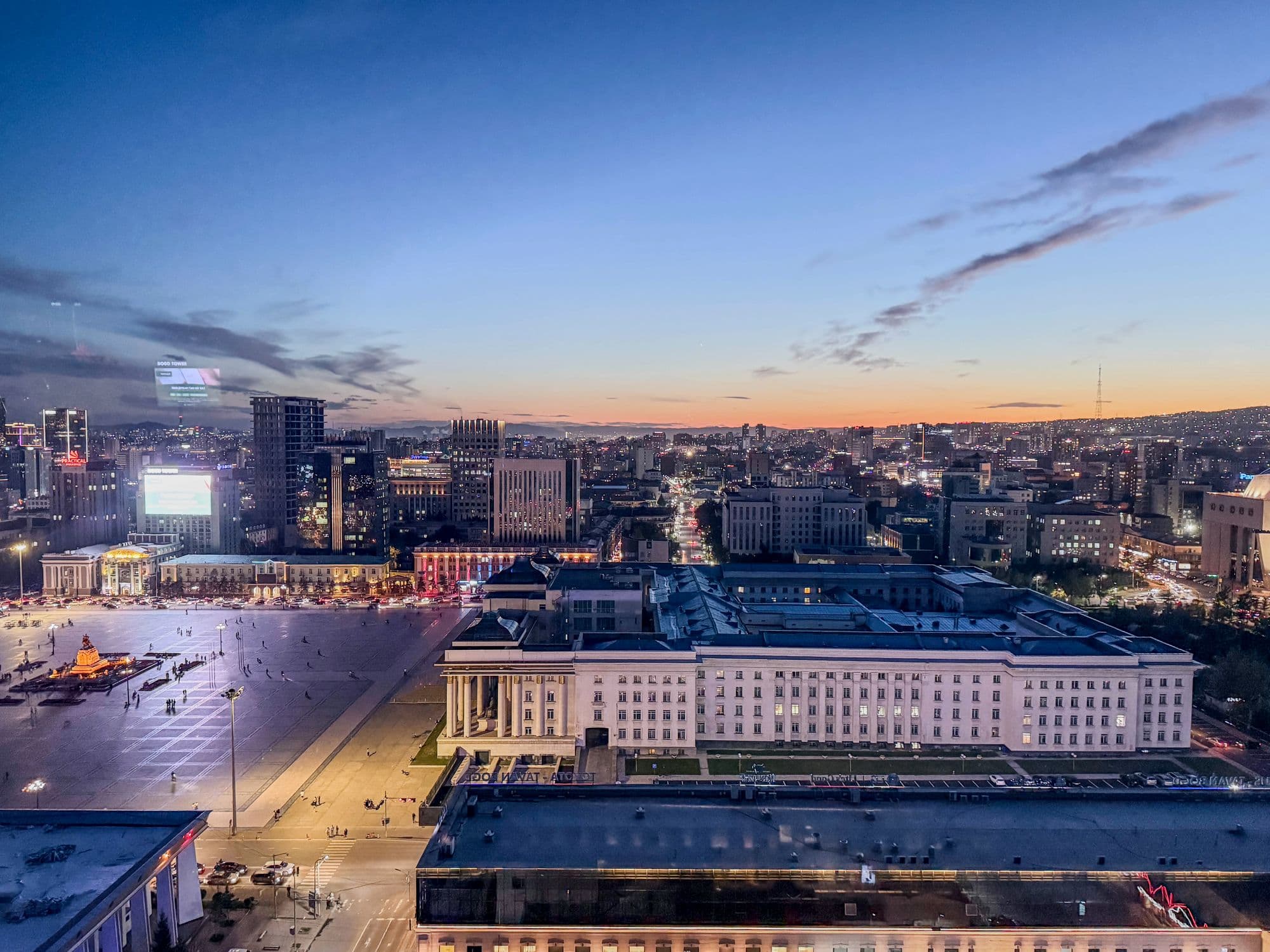
Ulaanbaatar
Ulaanbaatar
Mongolia's capital holds about 1.79 million people, roughly half the country, in a long valley on the Tuul river at around 1,300 m. It began in 1639 as a movable Buddhist monastic camp that shifted location 29 times before settling permanently on this spot in 1778, and took its present name in 1924. By mean annual temperature it is the coldest national capital in the world. For travellers it is less a destination than the hinge of every central-Mongolia trip: the museums that explain what you are about to drive through, the permits, the drivers and the last reliable ATM.
- Best months
- Jun–Sep