Arkhangai (Tsenkher sum)· Цэнхэрийн халуун рашаан
Tsenkher Hot Springs
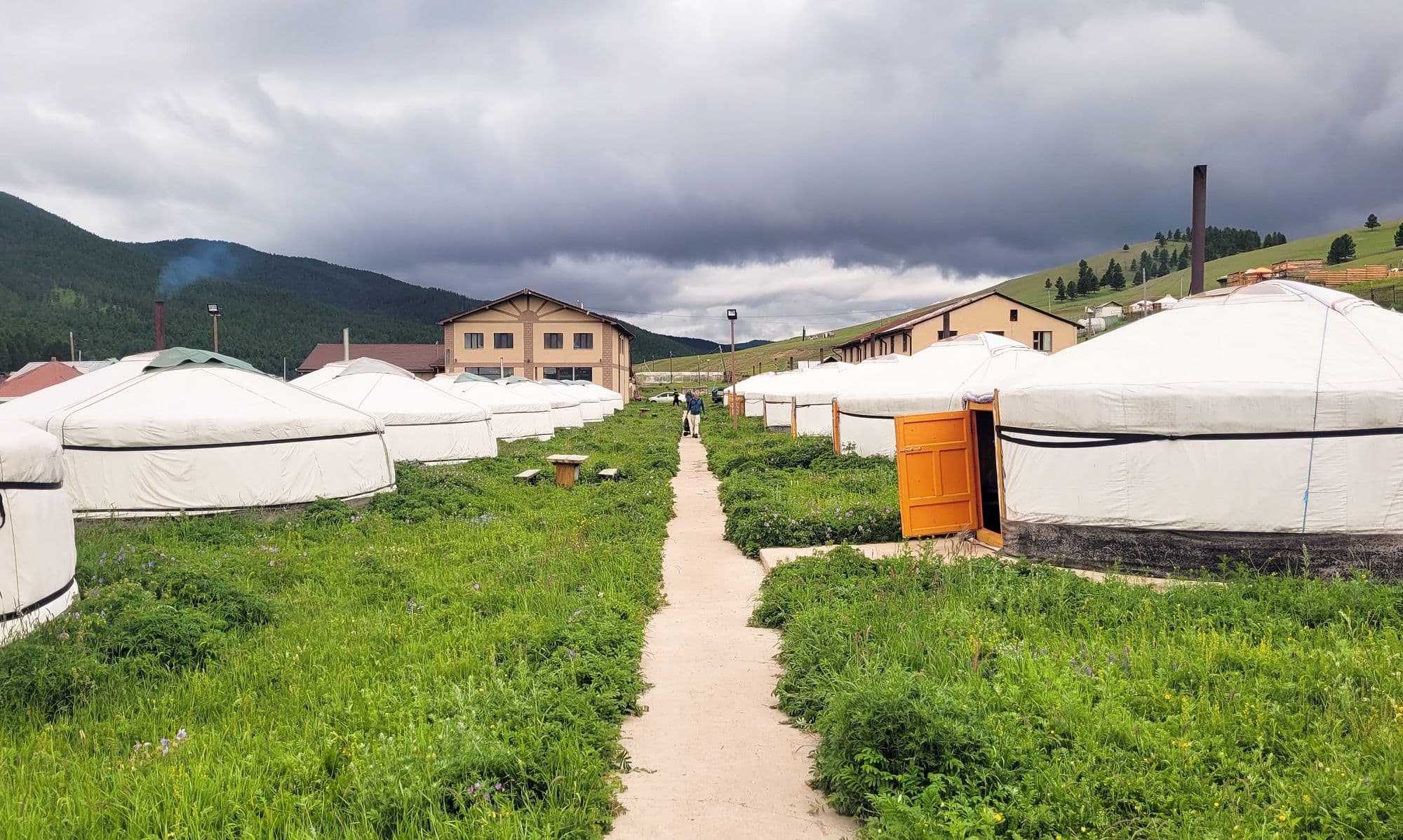
In a larch-edged side valley in Tsenkher sum, a handful of resort ger camps have been built around hot mineral water piped into open-air stone pools. There is nothing ancient or hidden about it - this is Mongolia's spa stop, and its job is obvious after three or four days of dirt roads and cold-water washes. You soak outdoors at about 1,770 metres with the valley walls above you, and on a clear night the steam and the stars do most of the work. Most people arrive from Kharkhorin and leave toward the Khangai lakes the next morning.
- From Ulaanbaatar
- 470 km
- Drive time
- 7-9, normally reached on the second day of a westward trip
- Altitude
- 1,767 m
- Typical stay
- 1
- Best months
- Jun–Sep
- Jan: not a best month
- Feb: not a best month
- Mar: not a best month
- Apr: not a best month
- May: not a best month
- Jun: a best month
- Jul: a best month
- Aug: a best month
- Sep: a best month
- Oct: not a best month
- Nov: not a best month
- Dec: not a best month
Highlights
- Open-air hot pools, usually available into the evening so you can soak under the stars
- Indoor tubs and private baths at the larger camps for cold or windy days
- Walks up the larch-wooded side valleys behind the camps
- Horse riding on the surrounding hills, arranged at the camps
- Other mineral springs in the same sum: Khökhsümiin rashaan and Altan Ovoony rashaan
- Tsetserleg, about 30 km away, with its Zaya Gegeen monastery museum and the Taikhar rock nearby
- A genuinely hot shower - rarer on a Mongolian road trip than it sounds
Season notes
The camps are seasonal; most run from roughly late May to late September. The pools stay usable in cold weather - that is rather the point - but the walk from ger to pool in a shoulder-season wind is a test of commitment. The access track into the valley is muddy and rutted after rain. Mosquitoes can be bad on still July evenings.
From Ulaanbaatar
Paved for most of the way, either via Kharkhorin or via Tsetserleg, then roughly 25-30 km of dirt road into the spring valley. That final stretch is the only part that needs care and it deteriorates after rain.
By air
None. Wikivoyage notes there are no domestic flights to anywhere within the central region.
Where to stay
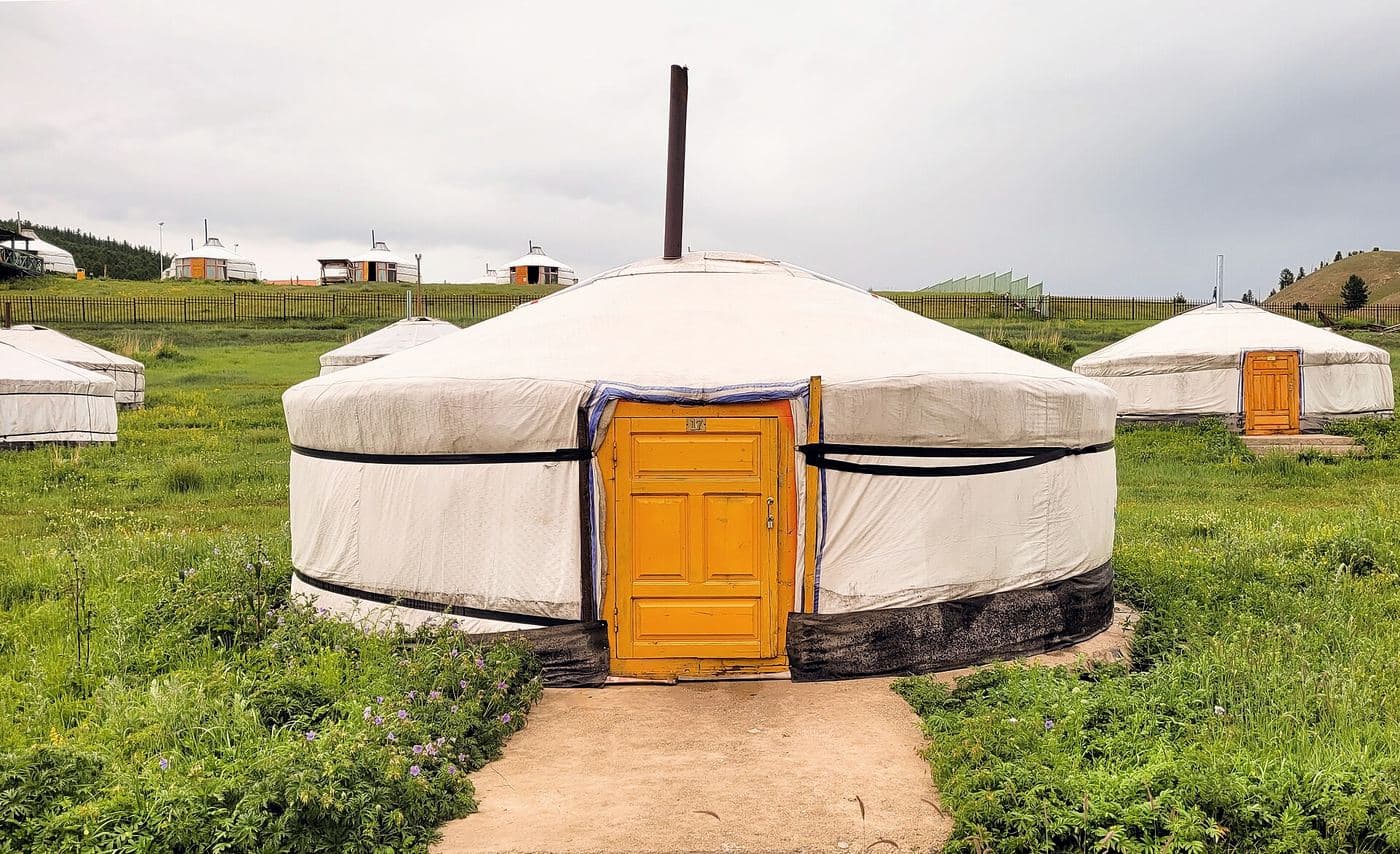
- Several resort-style ger camps sit within a kilometre of each other in the spring valley, all built around their own pools; no 2026 nightly rate could be verified from a primary source (unverified)
- Bathing is normally included for camp guests and charged separately for day visitors, but no published figure was found
Be aware
Sources (5)
- Хөхсүмийн рашаан - Монгол Википедиа — a second mineral spring in Tsenkher sum, its coordinates and mineral composition
- Алтан Овооны рашаан - Монгол Википедиа — a third mineral spring beside Tsenkher sum and its composition
- Nominatim (OpenStreetMap geocoder) — coordinates of the resort cluster in the Tsenkheriin rashaan locality, Tsenkher sum, Arkhangai; and Tsetserleg's location
- OpenTopoData SRTM 30 m — elevation of the spring valley
- Central Mongolia - Wikivoyage — absence of domestic flights within the central region
Often combined with
Kharkhorin and Erdene Zuu Monastery
Övörkhangai · 360 km
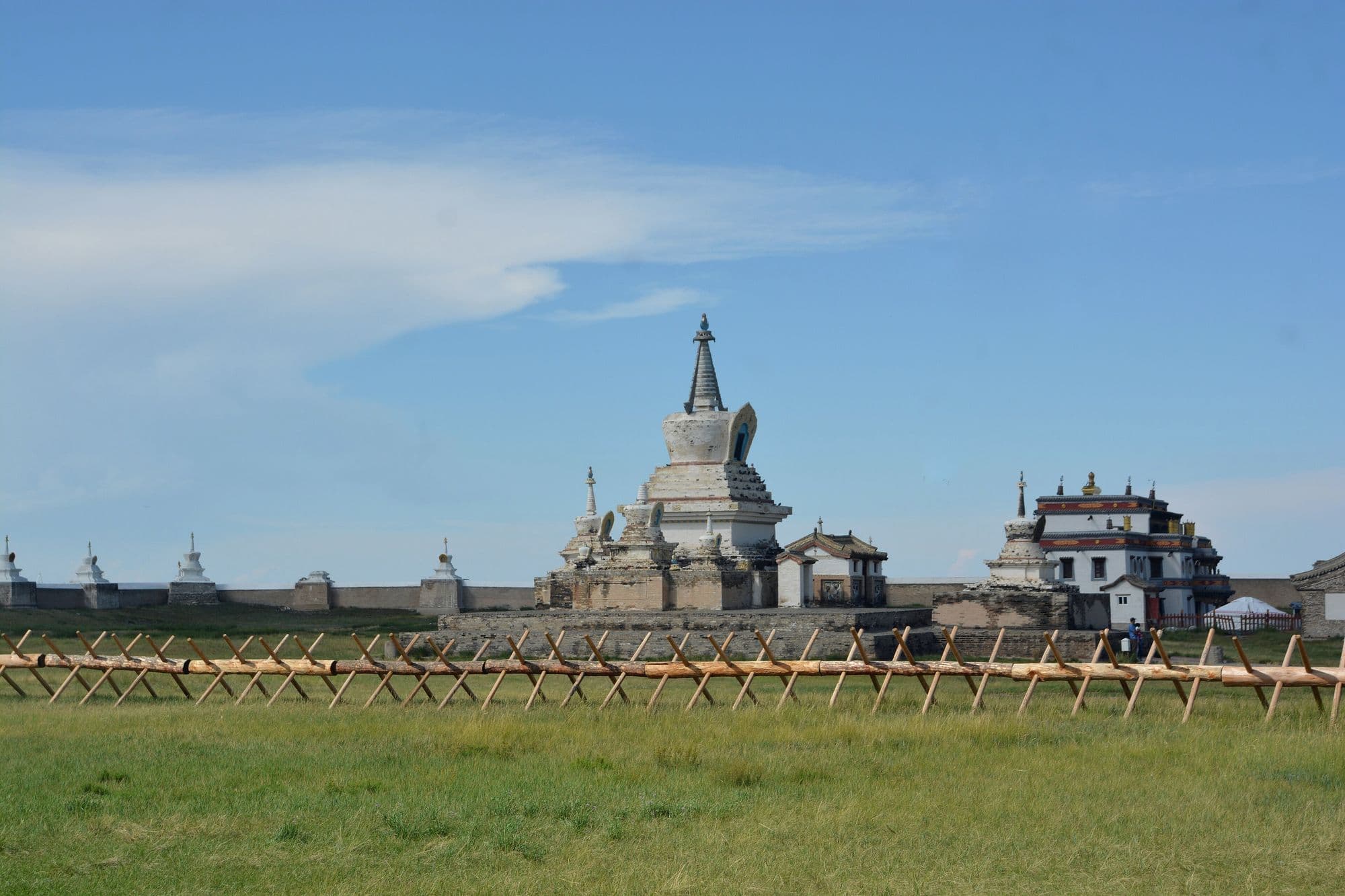
Kharkhorin sits at the lower end of the upper Orkhon valley, where the easternmost Khangai foothills meet open steppe. Just north of the modern town lie the ruins of Karakorum, briefly the imperial capital of the Mongol Empire under Ögedei Khan and the city William of Rubruck described in 1254. Built partly out of its stones in 1585, Erdene Zuu is probably the oldest surviving Buddhist monastery in Mongolia, a walled compound edged with stupas holding a handful of Chinese- and Tibetan-style temples and one working temple that still serves the town. Both sit inside the Orkhon Valley Cultural Landscape World Heritage Site.
- Best months
- Jun–Sep
Orkhon Valley Cultural Landscape and Ulaan Tsutgalan waterfall
Övörkhangai · 450 km
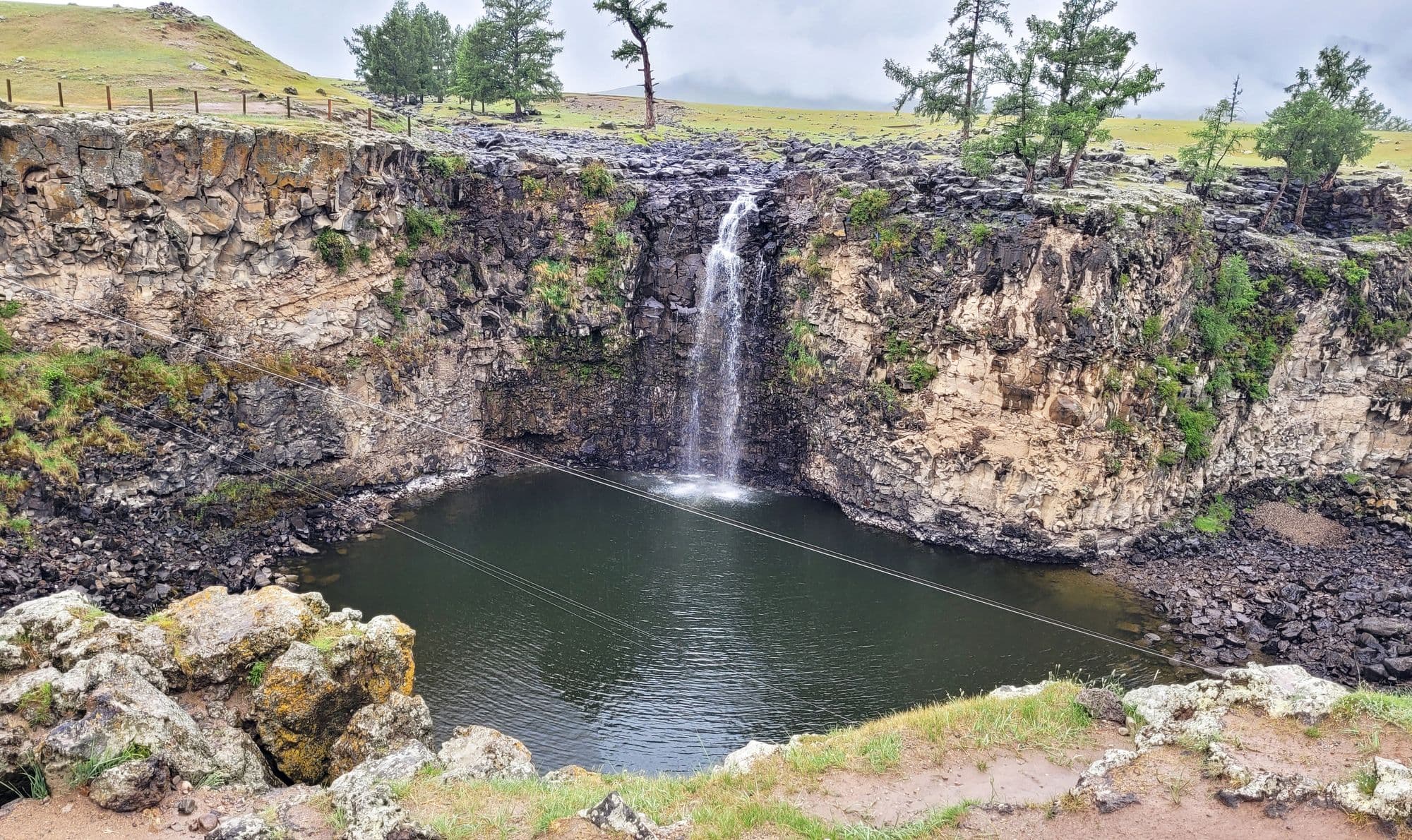
UNESCO inscribed the Orkhon Valley Cultural Landscape in 2004 under criteria (ii), (iii) and (iv): 121,967 hectares with a 61,044-hectare buffer, recognised for more than two thousand years of nomadic pastoral tradition and for the succession of empires that put their capitals along one river. Upstream from Kharkhorin the valley narrows into grassland, basalt and larch, and the place most travellers actually stop is Ulaan Tsutgalan, a 24-metre waterfall where the Ulaan river drops into the Orkhon. Getting there costs most of a day on rough track, which is exactly why the valley still feels like herder country rather than a monument.
- Best months
- Jul–Aug
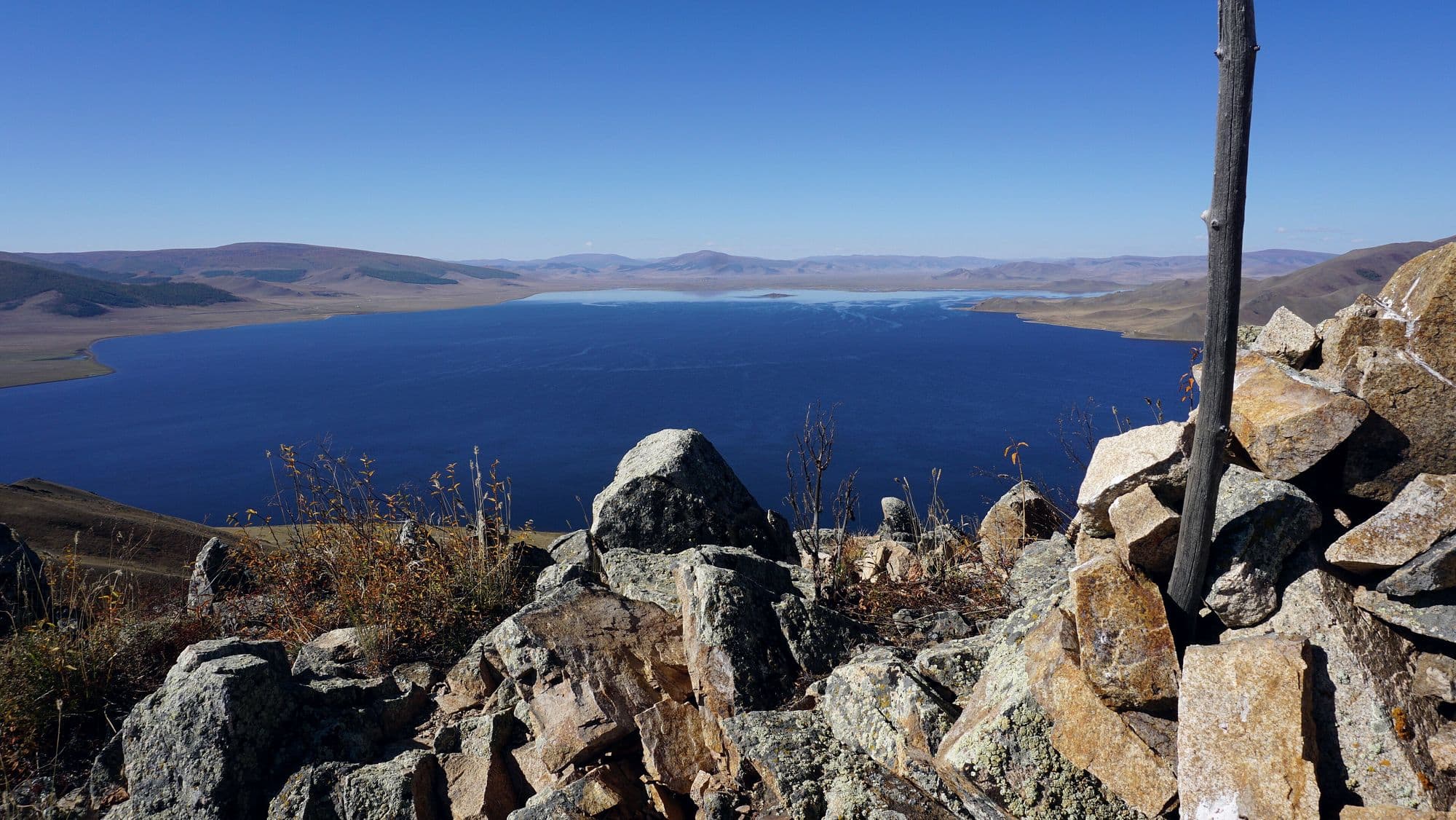
Terkhiin Tsagaan Lake (Great White Lake)
Arkhangai · 670 km
The Great White Lake lies at 2,060 metres in the Khangai, held in place by a lava dam: about nine thousand years ago the Khorgo cinder cone erupted and its flow blocked the North and South Terkh rivers. The result is roughly 61 km² of cold, clear fresh water with a shore of black basalt rubble, a climbable volcano at its eastern end, and larch forest on the slopes behind. Over ten rivers feed it and only the Suman flows out. It is the farthest of the standard central-Mongolia destinations and the one that most rewards staying two nights instead of one.
- Best months
- Jul–Aug