Khuvsgul (Хөвсгөл аймаг)· Хөвсгөл нуур
Lake Khuvsgul (Khovsgol Nuur)
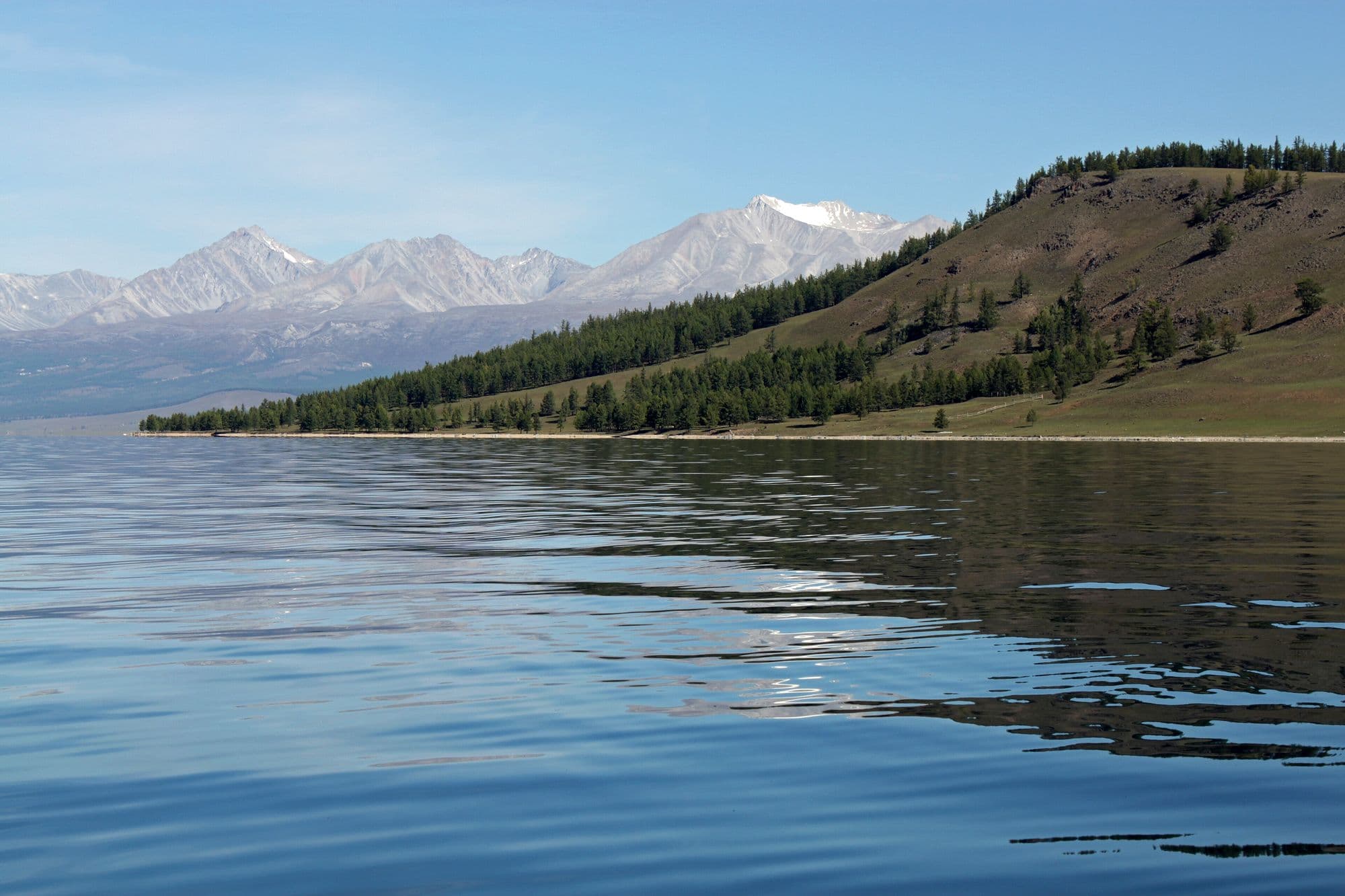
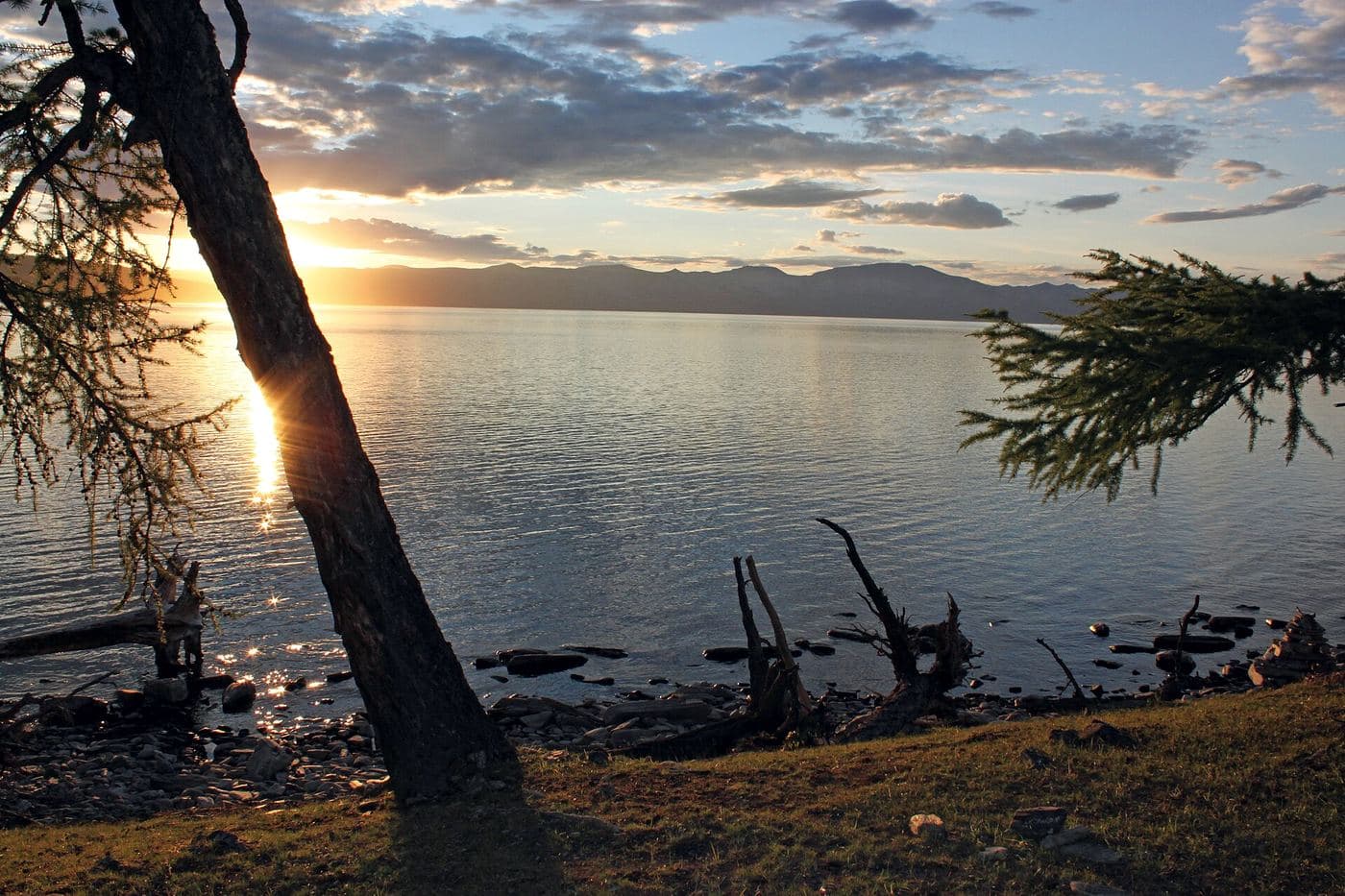
Khuvsgul is a deep, cold, exceptionally clear mountain lake in Mongolia's far north, set against the larch and cedar forests that mark the start of the Siberian taiga. It is more than two million years old, reaches 267 m deep, and stores roughly 70 percent of Mongolia's fresh water and about 0.4 percent of the world's. Most visitors base themselves at Khatgal at the southern end and spend their days riding, walking or boating along the shoreline, staying in ger camps built among the trees. Because the road from Ulaanbaatar is paved the whole way and flights land at Murun, it is the easiest place in Mongolia to combine forest, water and reindeer-herding culture in one trip.
- From Ulaanbaatar
- 800 km
- Drive time
- 12-15 hours driving, usually split over two days
- Altitude
- 1,645 m
- Typical stay
- 3-5 nights at the lake; 5-7 if combined with the Darkhad valley
- Best months
- Jun–Sep
- Jan: not a best month
- Feb: not a best month
- Mar: not a best month
- Apr: not a best month
- May: not a best month
- Jun: a best month
- Jul: a best month
- Aug: a best month
- Sep: a best month
- Oct: not a best month
- Nov: not a best month
- Dec: not a best month
Highlights
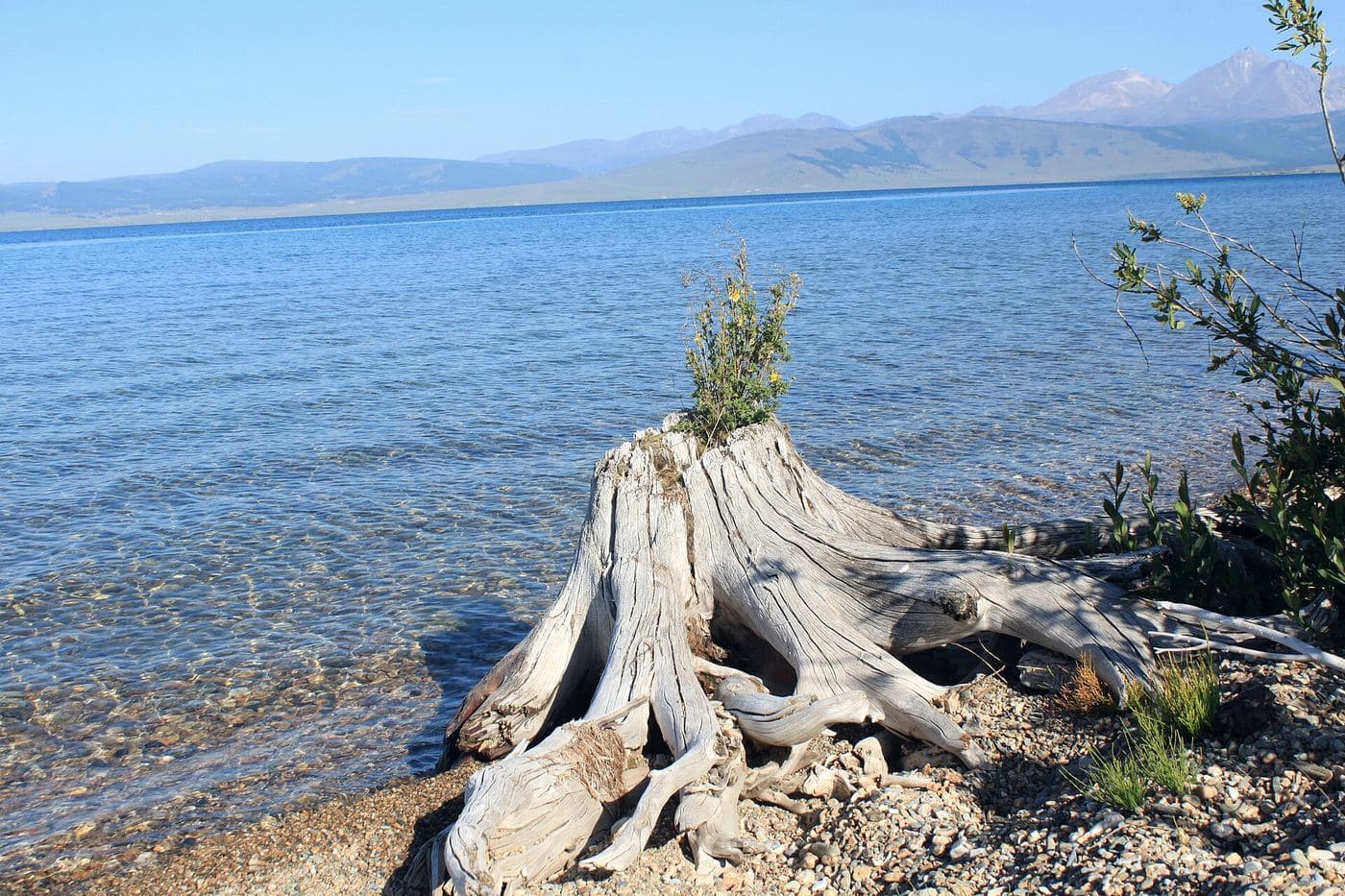
- The south-shore stretch between Khatgal and Jankhai, where pine forest comes down to a pebble and sand shoreline
- Boat trips to Modon Khuis and other headlands, and across to the far eastern shore
- Multi-day horse or yak treks along the western shore towards Renchinlkhumbe and the Darkhad Depression
- Shamanist ovoo cairns and offering sites around the lake, the heartland of Darkhad Mongolian shamanism
- Meeting Tsaatan reindeer families who bring animals down to camps near Khatgal in summer
- The Eg River outflow and the old wooden bridge at Khatgal, a relic of the Soviet-era lake port
- Night skies with almost no light pollution, and swimming or paddling for anyone who can stand water just above freezing
- Winter ice thick enough to carry heavy trucks, and an ice road used across the lake
Season notes
The practical season is mid-June to mid-September, when ger camps are open and the tracks around the shore are passable. July and August are warmest but also the wettest and the worst for biting insects. September brings gold larch, cold clear nights and thinning crowds; camps start closing at the end of the month. The lake freezes over completely in winter and the ice becomes strong enough to carry heavy trucks, which is when a winter ice road and ice-sport visits happen; from roughly late April to early June the lake is breaking up and the shore roads turn to mud.
From Ulaanbaatar
Paved for the whole route: Ulaanbaatar - Darkhan - Erdenet - Bulgan - Murun. Wikipedia gives the Murun-Ulaanbaatar road distance as 690 km, and the paved road on to Khatgal was finished in autumn 2012. Only the tracks beyond Khatgal along the shoreline are dirt. Routing engines return about 828 km door to door.
By air
MIAT flies Ulaanbaatar-Murun year round and Aero Mongolia seasonally (May-September), about 1.5 hours, quoted at 281,000 MNT one way on Wikivoyage; then a 2-6 hour taxi to Khatgal for 30,000-50,000 MNT. A seasonal direct summer service to Khatgal airstrip runs some years in June-August. Murun airport took its first international flight on 29 July 2025, Hunnu Air from Cheongju in South Korea.
Where to stay
- Lakeshore ger camps near Khatgal and Jankhai: roughly USD 10-110 per person per night depending on standard, per Wikivoyage listings retrieved September 2026 (examples listed: Khuvsgul Uyanga USD 10, Khuvsgul Eco Tour USD 30, Khuvsgul Dalai USD 35, Khuvsgul Ariundalai USD 60, Dalai Eej USD 110)
- Guesthouses and family homestays in Khatgal village at the low end of that range
- Own tent: camping is widely practised along the shore, subject to national park rules
Be aware
Sources (6)
- Lake Khovsgol - Wikipedia — Coordinates, 1,645 m elevation, 267 m depth, 2,760 km2 area, 136 x 36.5 km, share of fresh water, age, winter ice, Mongolian Cyrillic name
- Khovsgol Province - Wikipedia — Murun as aimag capital, 690 km road distance to Ulaanbaatar, paved road to Khatgal finished autumn 2012, Murun and Khatgal airports
- Lake Khovsgol - Wikivoyage (via MediaWiki API extract) — Bus fare 57,000 MNT (Jan 2024) and about 15 hours, Murun flight 281,000 MNT, taxi 30,000-50,000 MNT, ger camp prices USD 10-110, horse riding 5,000-10,000 MNT/hour, note that swimming is impractical
- Wikipedia coordinates API for Khatgal and neighbouring settlements — Khatgal visitor-point coordinates 50.4394 N, 100.1617 E
- Wikipedia airport articles (Murun, Olgii, Choibalsan) — Murun Airport first international flight from Cheongju by Hunnu Air on 29 July 2025
- Yahoo! Japan results for Mongolian destination names — Confirming that Japanese travel pages consistently write the lake as フブスグル湖
Often combined with
Tsaatan (Dukha) reindeer herders of the Khuvsgul taiga
Khuvsgul · 970 km
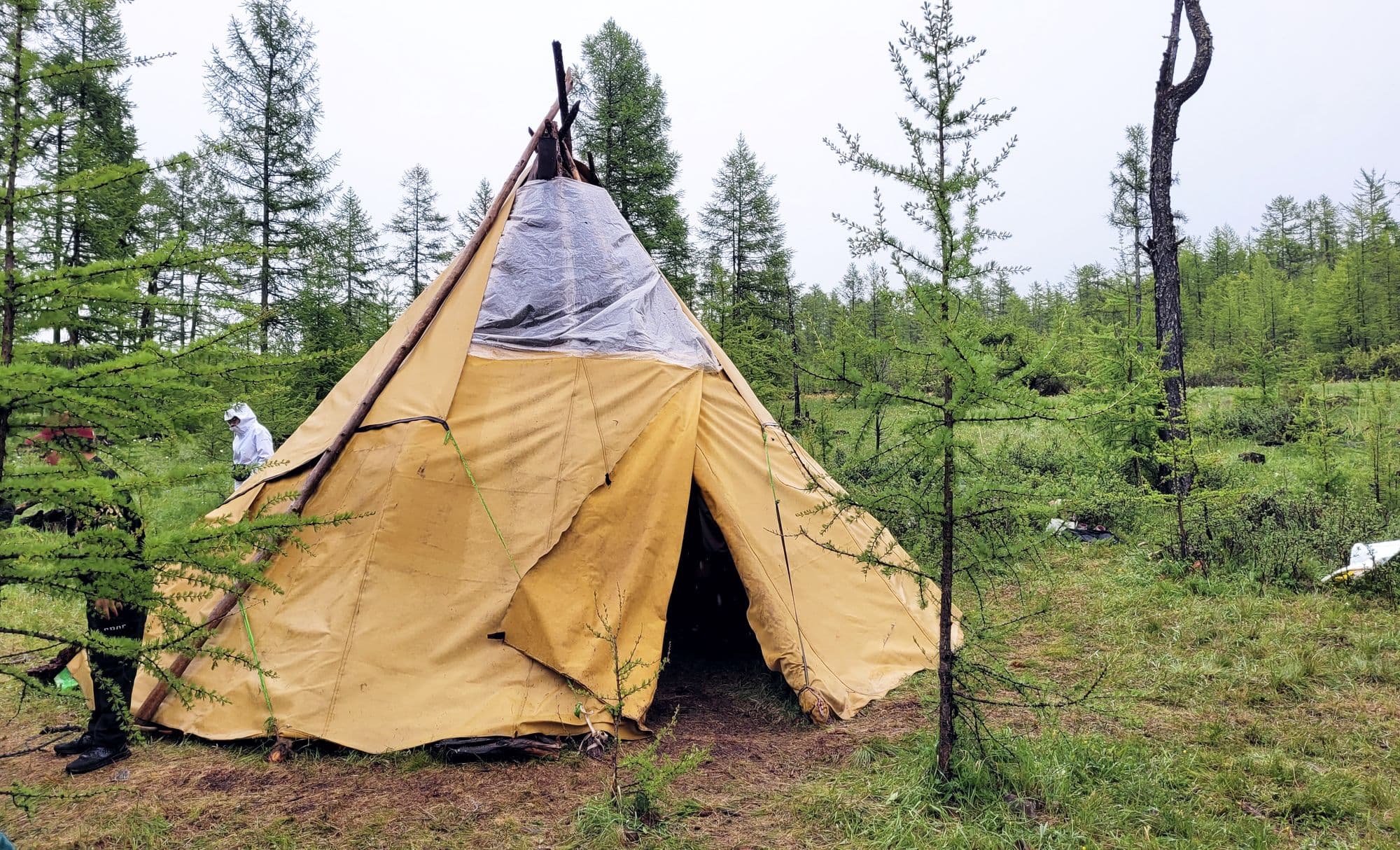
North-west of Lake Khuvsgul, past the Darkhad Depression, a few dozen families of Dukha herders - called Tsaatan, 'those who have reindeer', in Mongolian - still move their camps through the larch and moss taiga with domesticated reindeer. They live in ortz, conical birch-bark and canvas tents, in small clusters of two to seven households, split between what Mongolians call the East Taiga and the West Taiga. Visiting means a long drive to Tsagaannuur or Renchinlkhumbe and then hours on horseback into the forest, sleeping in or beside a herder's tent. It is the most demanding and the most culturally sensitive trip in northern Mongolia, and the community is tiny, so how a visit is arranged matters more than where it goes.
- Best months
- Jun–Sep
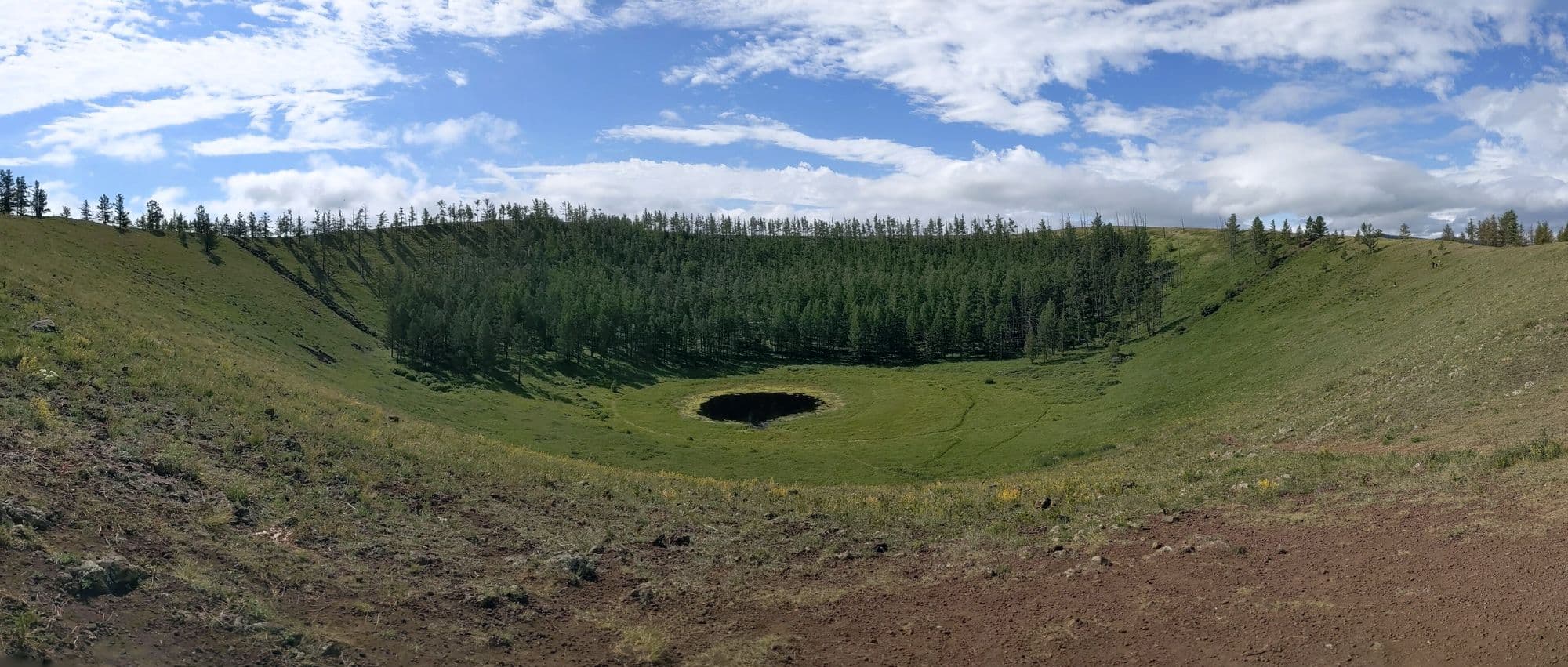
Uran Togoo extinct volcano (Uran Togoo-Tulga Uul Natural Monument)
Bulgan · 458 km
Uran Togoo is a small, perfectly preserved extinct volcano standing alone above the forest-steppe of Bulgan province, right beside the paved road that carries almost every vehicle heading from Ulaanbaatar to Lake Khuvsgul. A path climbs from the car park to the crater rim in well under an hour, and the rim looks down into an unbroken bowl 500-600 m across and 50-60 m deep, wooded on the inside and often holding a small pool. It is one of four extinct cones in the group, alongside Tulga, Togoo and Jalavch, all formed in the Quaternary and last active some 20,000-25,000 years ago. As a half-day stop it is the single most efficient way to break the drive north, which is exactly how most itineraries use it.
- Best months
- May–Sep