Khuvsgul (Хөвсгөл аймаг)· Цаатан (Духа) айлуудын тайга
Tsaatan (Dukha) reindeer herders of the Khuvsgul taiga
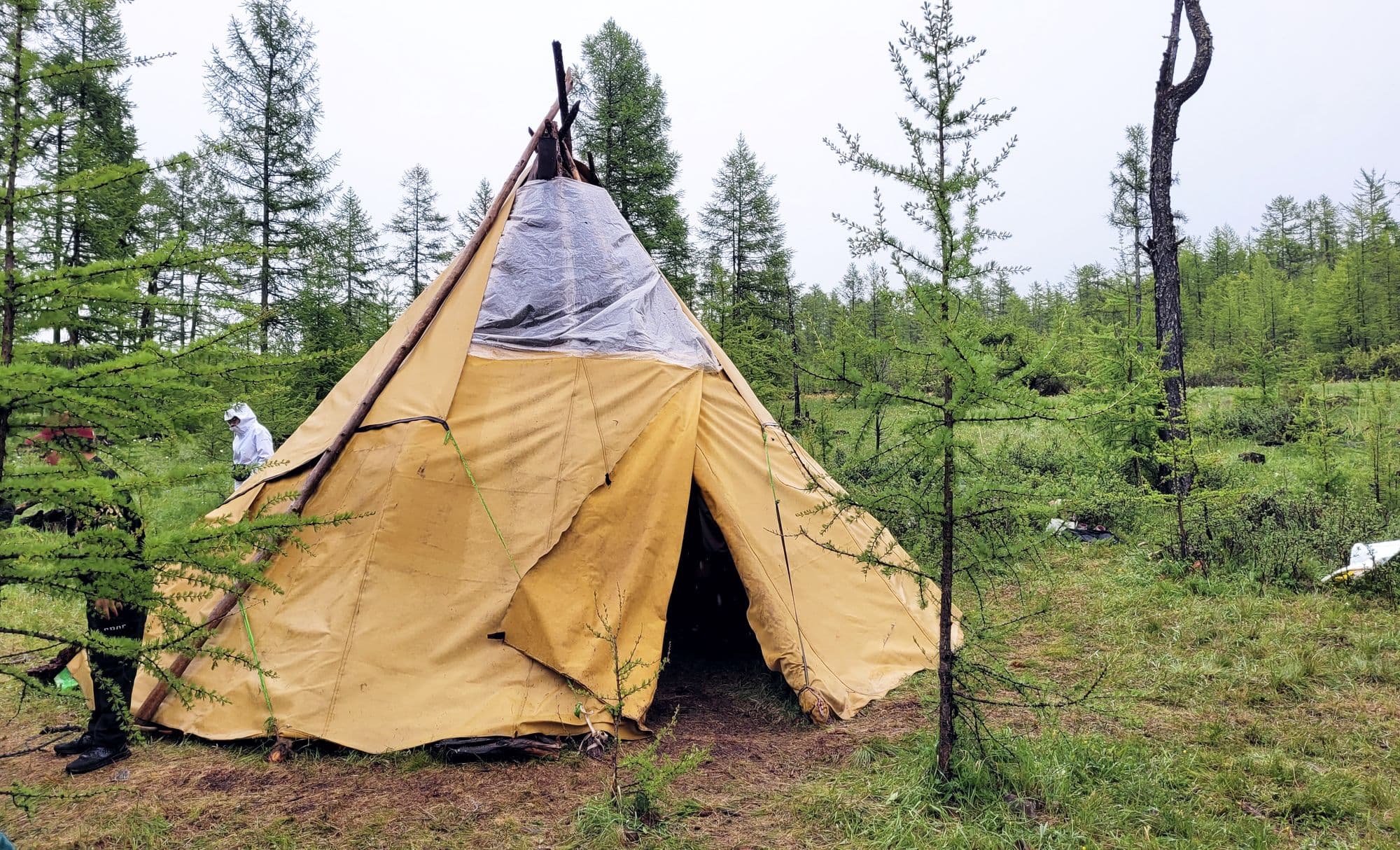
North-west of Lake Khuvsgul, past the Darkhad Depression, a few dozen families of Dukha herders - called Tsaatan, 'those who have reindeer', in Mongolian - still move their camps through the larch and moss taiga with domesticated reindeer. They live in ortz, conical birch-bark and canvas tents, in small clusters of two to seven households, split between what Mongolians call the East Taiga and the West Taiga. Visiting means a long drive to Tsagaannuur or Renchinlkhumbe and then hours on horseback into the forest, sleeping in or beside a herder's tent. It is the most demanding and the most culturally sensitive trip in northern Mongolia, and the community is tiny, so how a visit is arranged matters more than where it goes.
- From Ulaanbaatar
- 970 km
- Drive time
- About 25 hours of driving to Tsagaannuur, in practice 2-3 days, plus 4-8 hours on horseback to a camp
- Typical stay
- 1-2 nights in a taiga camp, inside a 5-8 night round trip from Murun
- Best months
- Jun–Sep
- Jan: not a best month
- Feb: not a best month
- Mar: not a best month
- Apr: not a best month
- May: not a best month
- Jun: a best month
- Jul: a best month
- Aug: a best month
- Sep: a best month
- Oct: not a best month
- Nov: not a best month
- Dec: not a best month
Highlights
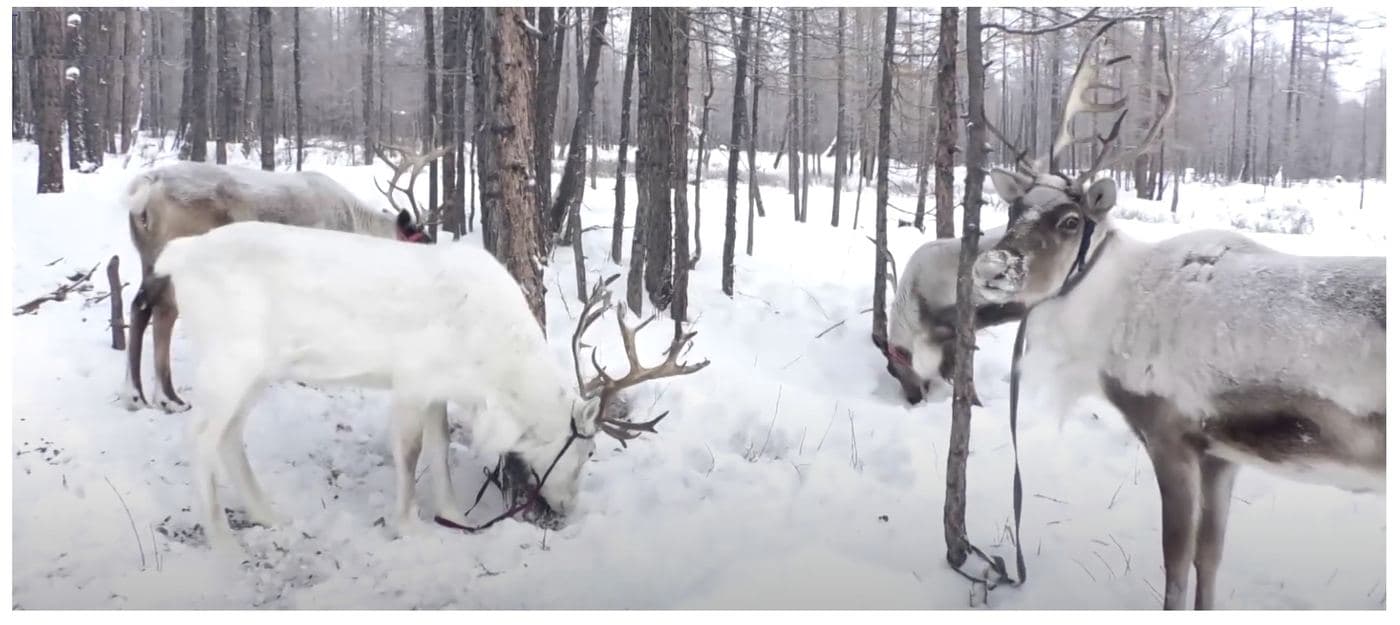
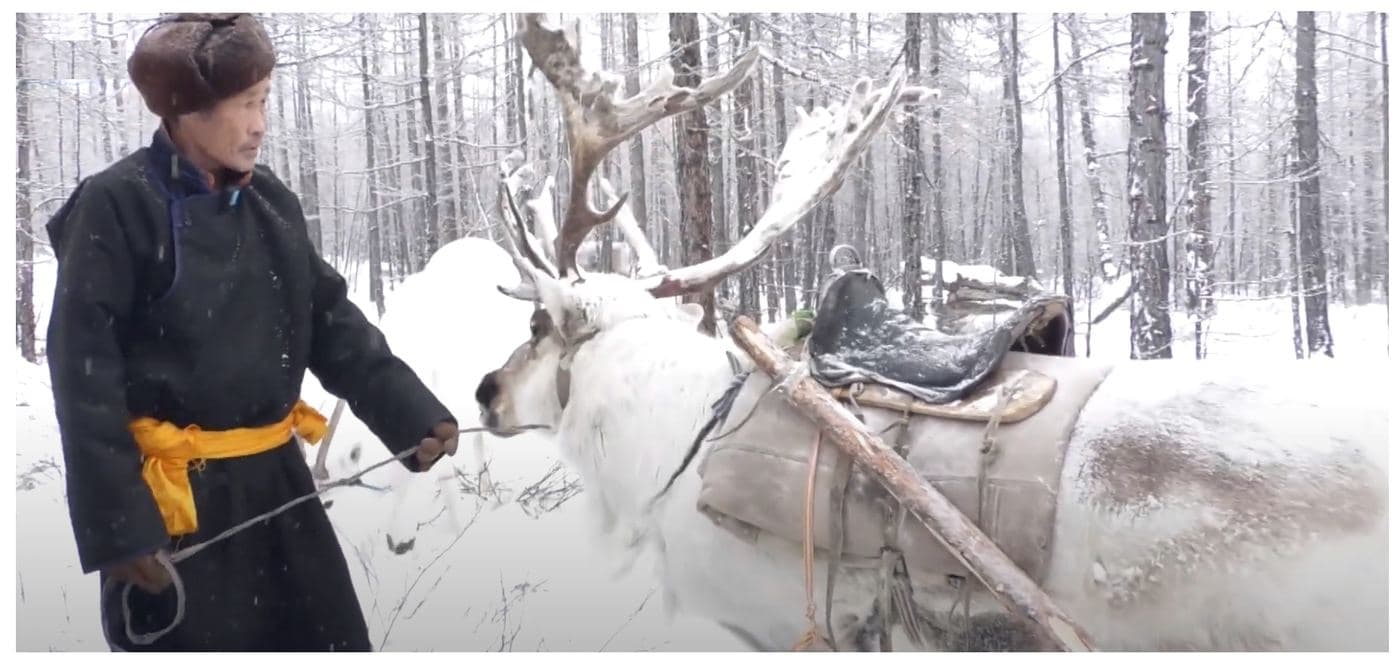
- Reindeer at close quarters in a working camp: milking, saddling, and calves in summer
- Ortz (birch-bark and canvas tepee) camps, quite unlike a felt ger
- The horse ride in through larch forest, bog and river crossings from the Darkhad side
- The Darkhad Depression itself, a broad shamanist valley of lakes and pasture ringed by mountains
- Shamanist practice, which is alive here rather than performed for visitors
- Dood Tsagaan Lake near Tsagaannuur, a shallow lake reached before the taiga climb
- Handmade reindeer-antler and wood crafts, the herders' main cash income alongside visitor fees
Season notes
Late June to early September is the realistic window. The herders move between summer camps at higher, cooler, less insect-ridden ground and lower autumn and winter camps, so the ride length changes through the season and the camp you are told about in May may have moved by August. Spring thaw (April-May) and autumn rain turn the Darkhad tracks to deep mud and make river crossings dangerous. Winter visits happen but mean temperatures far below -30 C and much longer travel.
From Ulaanbaatar
Paved to Murun (690 km). After Murun it is dirt and track the whole way: Murun - Ulaan-Uul - Renchinlkhumbe - Tsagaannuur, over the Jigleg or Ulaan Taiga passes, with river fords. Routing engines return about 972 km and 25 hours for Ulaanbaatar to Tsagaannuur. Only high-clearance 4x4 or Russian van, and a driver who knows the route.
By air
Fly Ulaanbaatar-Murun (about 1.5 hours) and drive north from there, which saves roughly two days; there is no scheduled service into the Darkhad valley.
Where to stay
- Sleeping in or next to a herder family's ortz, usually on the floor on hides and mats; bring your own sleeping bag. Charges are set by the community rather than published rates, so agree the amount before you go in.
- Guesthouses and simple ger stays in Ulaan-Uul, Renchinlkhumbe and Tsagaannuur as staging points
- Tent camping on the ride in
Be aware
Sources (5)
- Dukha people - Wikipedia — Population 208 in 2020, 600 reindeer by 2010, ortz dwellings, East and West Taiga, Dukhan language, Tsagaannuur sum, tourism from the mid-1990s
- Wikipedia extract for Tsagaannuur, Khovsgol — Sum area 5,410 km2, 1,317 people in 2000 including 269 Tsaatan, centre Gurvansaikhan on Dood Tsagaan Lake
- Wikipedia coordinates API — Tsagaannuur 51.3544 N, 99.3533 E and Renchinlkhumbe 51.1086 N, 99.6708 E
- Darkhad - Wikipedia (via API extract) — Darkhad people in Bayanzurkh, Ulaan-Uul, Renchinlkhumbe and Tsagaannuur districts, about 16,268 people in 2000, shamanism, 200-300 km seasonal moves in the Darkhad valley
- OSRM driving distance table from Ulaanbaatar — Road distance and driving time Ulaanbaatar to Tsagaannuur: about 972 km, about 25 hours
Often combined with
Lake Khuvsgul (Khovsgol Nuur)
Khuvsgul · 800 km
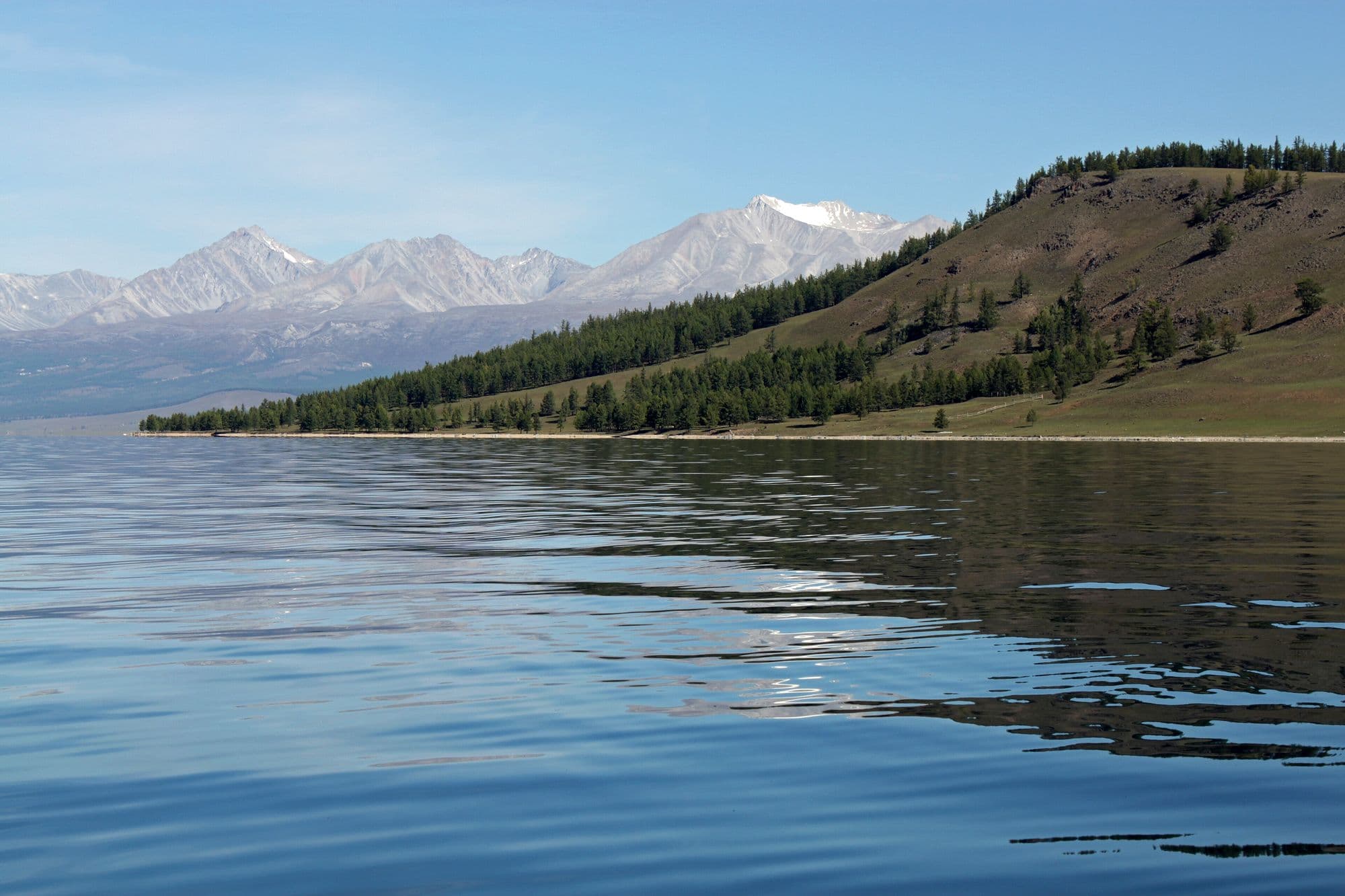
Khuvsgul is a deep, cold, exceptionally clear mountain lake in Mongolia's far north, set against the larch and cedar forests that mark the start of the Siberian taiga. It is more than two million years old, reaches 267 m deep, and stores roughly 70 percent of Mongolia's fresh water and about 0.4 percent of the world's. Most visitors base themselves at Khatgal at the southern end and spend their days riding, walking or boating along the shoreline, staying in ger camps built among the trees. Because the road from Ulaanbaatar is paved the whole way and flights land at Murun, it is the easiest place in Mongolia to combine forest, water and reindeer-herding culture in one trip.
- Best months
- Jun–Sep